Peptide · Immune
Thymosin A-1
A thymic peptide that mirrors a fragment your body makes to train its own T-cells — studied not for building tissue or shifting hormones, but for helping a tired or lopsided immune response find its balance.
Available by consultation
What it is
Immune Support
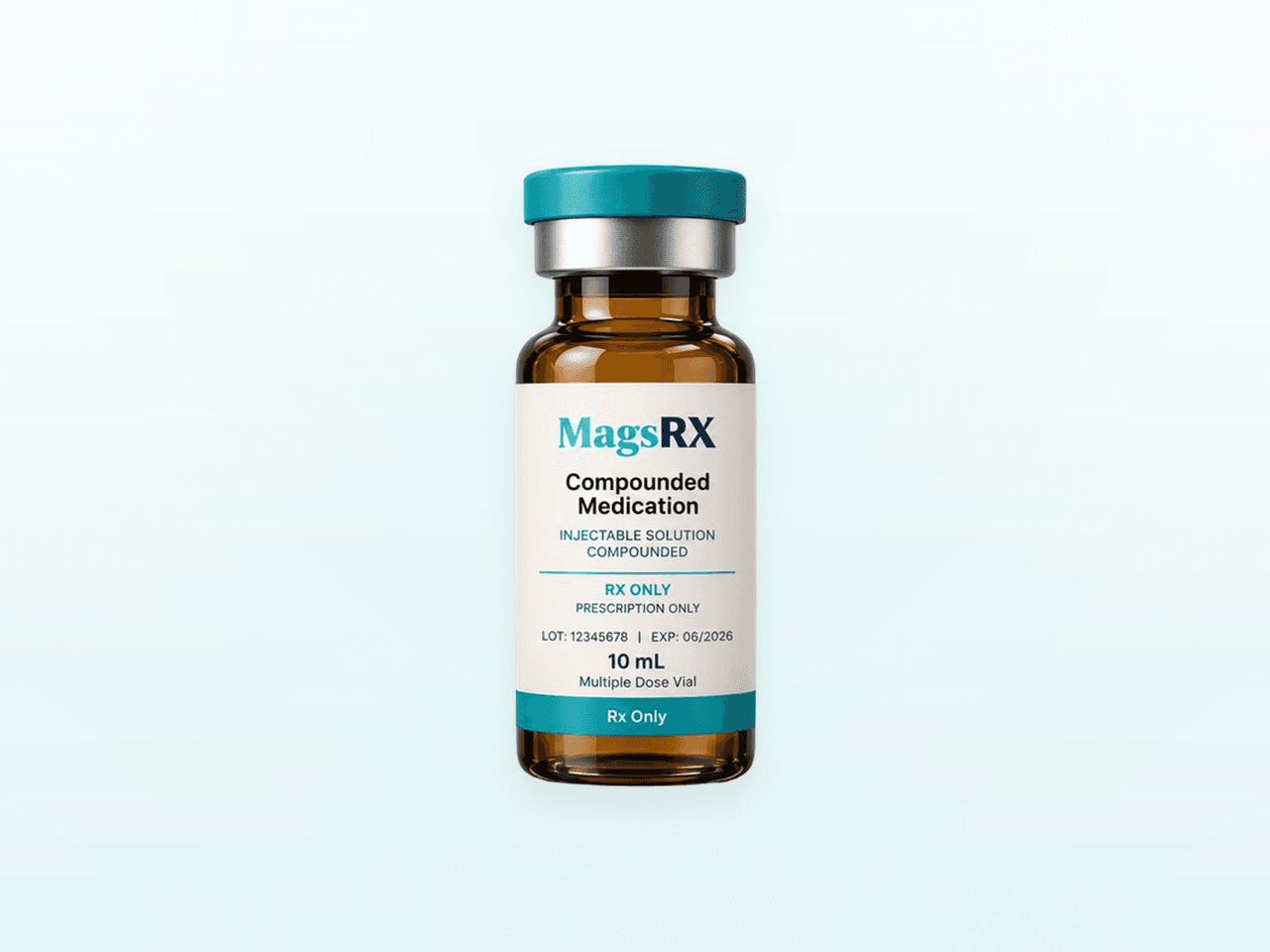
Thymosin Alpha-1 is a 28-amino-acid peptide that corresponds to a fragment naturally produced by the thymus, the gland where T-cells are trained. It sits in an entirely different lane from the rest of this menu: it is not a GHRH analog like Sermorelin or Tesamorelin, not a tissue-repair peptide like BPC-157, and not a cellular fuel like NAD+. Its studied role is immune modulation — helping T-cells mature and function, engaging the innate immune system through Toll-like-receptor signaling, and supporting a more balanced, better-coordinated immune response. It is a compounded therapy, prescribed only when a licensed provider determines it is clinically appropriate for you.
Thymosin Alpha-1 does not add a hormone or rebuild tissue. It is studied as an immune conductor — a signal explored for helping the body's own defensive cells mature, communicate, and respond in proportion. That immunomodulatory role is what sets it apart from every peptide beside it here.
T-cell maturation & function
Because it mirrors a fragment the thymus makes, Thymosin Alpha-1 is studied for helping T-cells differentiate and mature — the arm of adaptive immunity that identifies and clears threats. This is a lymphocyte-focused mechanism with no parallel among the GH-axis or repair peptides on this site.
Innate signaling via Toll-like receptors
Research points to Thymosin Alpha-1 engaging Toll-like receptors — chiefly TLR9 and TLR2 — on dendritic cells and other innate immune cells. Activating these sensors is studied for priming the early, first-responder side of immunity and its hand-off to the adaptive side.
Cytokine balance, not just stimulation
Rather than simply switching immunity up, it is studied for shifting cytokine signaling toward equilibrium — which is why research interest spans both blunted immune responses and over-active, poorly regulated ones. The direction of the research is calibration, not brute stimulation.
Candidacy
A considered fit, not a funnel.
Thymosin Alpha-1 tends to interest adults whose concern is immune resilience and a well-regulated defensive system — a different profile than someone chasing tissue recovery from BPC-157, deeper sleep from a GH peptide, or cellular energy from NAD+. It is often explored by people who feel they catch every bug going around or whose immune reserve seems to have thinned with age or stress. It is studied as support for the immune system rather than as a treatment for any specific infection or condition, and a provider reviews your history to decide whether it fits your goals.
- Adults focused on immune resilience and a balanced, well-coordinated immune response
- Those interested in supporting T-cell and innate-immune function as it dips with age or stress
- People who want an immune-directed peptide rather than a GH, tissue-repair, or metabolic one
- Anyone who is pregnant, breastfeeding, or trying to conceive
- People with autoimmune disease or on immunosuppressive therapy, without close provider oversight, since immune modulation may be unpredictable
- Organ-transplant recipients, or anyone with a known hypersensitivity to the peptide or diluent
Expected Timeline
What to expect
Thymosin Alpha-1 is usually run as a defined immune-support course on a consistent schedule rather than an open-ended regimen — often front-loaded during a period when immune resilience is the focus, then reassessed. Your provider sets the exact dose and cadence.
- 01
Weeks 1-2
Onboarding
After provider review of your history — including any autoimmune conditions or immune-modifying medications — you begin a small subcutaneous dose, typically on a regular several-times-weekly schedule. Early days are about routine and tolerability rather than any felt change, since this works through immune signaling, not a symptom you feel day to day.
- 02
Weeks 3-8
Immune support window
The core course, where consistent dosing continues while the T-cell and immune-modulating goals are pursued. Because Thymosin Alpha-1 acts on immune signaling rather than a felt symptom, this phase is about steady adherence more than day-to-day sensation.
- 03
Weeks 8+
Reassess & cycle
Rather than continuing indefinitely, immune-support courses are commonly reassessed and often cycled. Your provider decides whether to continue, pause, or move to a maintenance rhythm based on how you're doing and your broader health picture.
Response varies from person to person, and Thymosin Alpha-1 is a compounded, provider-directed therapy. Your protocol, dose, and duration are set and adjusted by your prescriber — the cadence above is illustrative, not a promise of any particular result.
The Science
Why clinicians reach for it.
Thymosin Alpha-1 has a longer research history internationally than many peptides on this menu, largely as an immune modulator. We describe the direction of that research honestly — no invented trials, no promised outcomes.
Rooted in thymic biology
It corresponds to a naturally occurring thymic peptide fragment, which is why research attention has centered on T-cell maturation and immune coordination — the thymus's own job — rather than any endocrine or tissue-repair role.
Studied as an immune modulator
A branded form (thymalfasin) has been studied outside the US in immune-related research contexts, including as a vaccine adjuvant. Research interest sits in how it may help calibrate immune responses, though the evidence base continues to develop and is not uniform.
Not FDA-approved
Thymosin Alpha-1 is not an FDA-approved drug in the US and is available only through compounding when a licensed provider deems it appropriate. It should be viewed as a supportive, immune-directed therapy — not an established treatment for any infection or disease.
Our Standard of Care
Real transformation, with a friendly team that stands by you every step.
- 01.Provider-Supervised
- Licensed providers review your health profile and guide every treatment decision. You only move forward when a plan is right for you.
- 02.Personalized Plans
- GLP-1 and peptide protocols are titrated to your biology and your goals. No one-size-fits-all, no guesswork.
- 03.We Stand By You
- From eligibility review to ongoing check-ins, our care team supports you throughout your transformation — discreet shipping and secure messaging included.
Clinical Safety
No therapy is right for everyone.
What to know
Thymosin Alpha-1 is generally reported to be well tolerated. The most common effects are mild and local: redness, discomfort, or transient irritation at the injection site. Because it is studied for modulating immune activity, any new or unusual symptom — particularly flares of joint pain, rash, or other signs of immune activation — should be reported to your provider promptly, as human data remains limited.
Contraindications
Not appropriate during pregnancy, breastfeeding, or while trying to conceive, or for anyone with a known hypersensitivity to the peptide or diluent. Because it acts on the immune system, it requires careful provider oversight — or is avoided — in people with autoimmune disease, those on immunosuppressive therapy, and organ-transplant recipients, where altering immune balance could be unpredictable. Share your full medical history and medication list so your provider can assess suitability.
MagsRX protocols are prepared by partner compounding pharmacies in the United States. Compounding pharmacies are regulated by both state boards and the FDA and have been part of American medicine since long before mass-manufactured drugs existed. The active ingredient is prepared per your protocol — supervised by your provider — and delivered direct to your door.
Frequently Asked
Questions worth asking before you begin.
It works in a completely different system. BPC-157 is studied for localized tissue and gut repair, and Sermorelin acts on the growth-hormone axis. Thymosin Alpha-1 is an immune-modulating thymic peptide — its studied pathways are T-cell maturation and Toll-like-receptor signaling, which is about immune balance rather than repair, hormones, or metabolism.
The research framing is modulation, not simple stimulation. Thymosin Alpha-1 is studied for shifting immune signaling toward balance, which is why interest spans both under-active and over-reactive responses. That is also why anyone with an autoimmune condition needs close provider oversight before considering it.
It is not FDA-approved in the US. It is a compounded medication dispensed only after a licensed provider reviews your intake and determines it is clinically appropriate for you — never sold over the counter here.
Explore More
Other therapies to consider.
 Tissue Repair
BPC-157
A body-protection pentadecapeptide studied for how it may support the slow-healing places — a strained tendon, an irritable gut lining, a joint that lingers.
Learn more →- GH Support
Sermorelin
A GHRH analog that asks your own pituitary to release growth hormone on its natural nightly schedule — rather than replacing the hormone from outside.
Learn more → - GH Secretagogue Stack
Ipamorelin + CJC-1295
Two peptides, two doorways into your own growth hormone — a steady GHRH signal from CJC-1295 paired with Ipamorelin's clean release trigger, tuned to work with your nightly rhythm rather than override it.
Learn more →
Begin
Thymosin A-1 begins with a short assessment.
A licensed provider reviews every order and prescribes only if it is clinically appropriate for you. Your therapy is prepared by a partner compounding pharmacy and delivered discreetly to your door.