Peptide · Growth-Hormone Support
Ipamorelin + CJC-1295
Two peptides, two doorways into your own growth hormone — a steady GHRH signal from CJC-1295 paired with Ipamorelin's clean release trigger, tuned to work with your nightly rhythm rather than override it.
Available by consultation
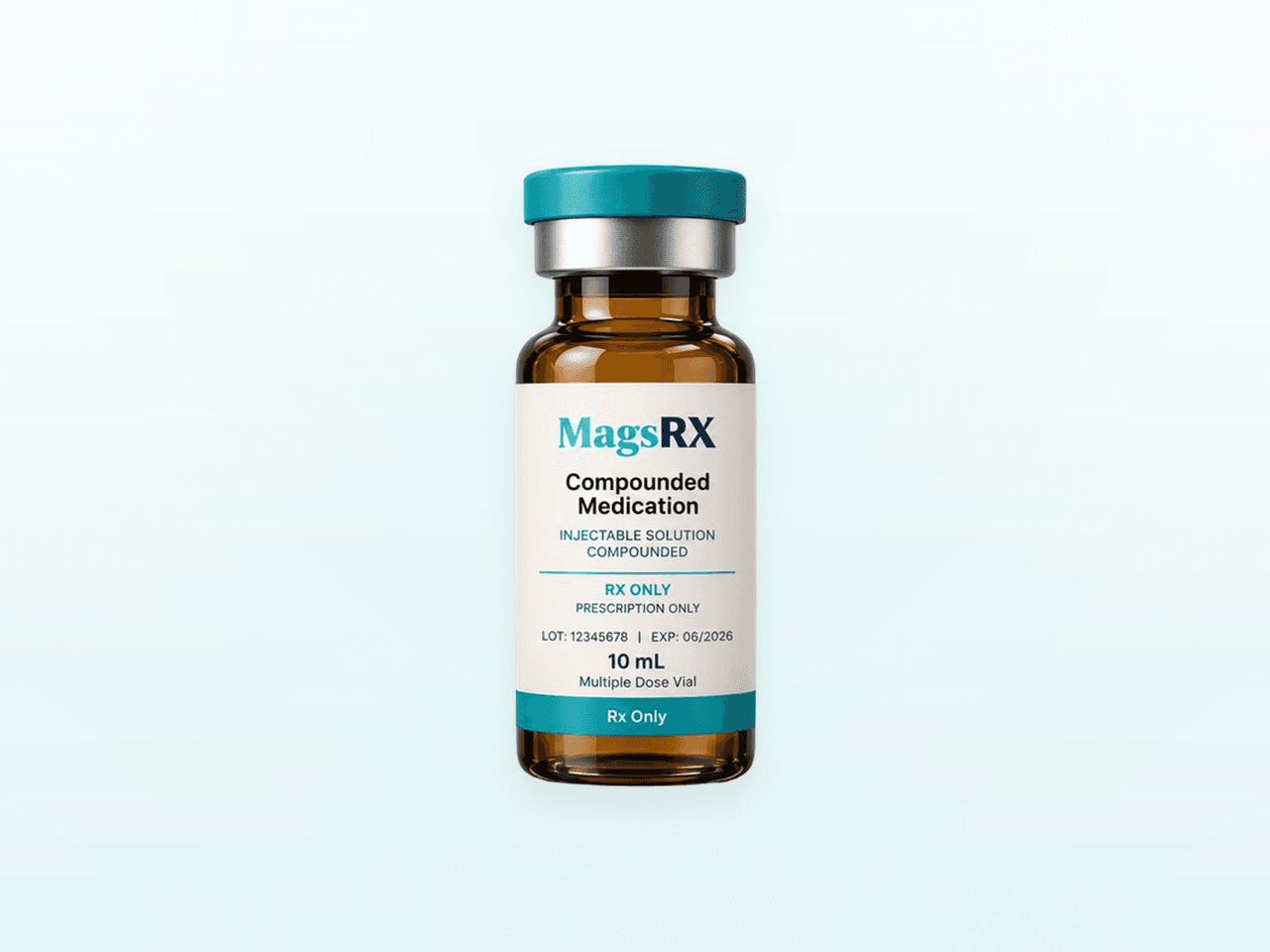
What it is
GH Secretagogue Stack
Ipamorelin + CJC-1295 is a paired peptide protocol that acts on two complementary levers of the same pituitary system. CJC-1295 is a long-acting GHRH analog that raises the background signal telling your pituitary to build and release growth hormone, while Ipamorelin is a selective GH-releasing peptide — a ghrelin-receptor agonist — that prompts a discrete pulse without meaningfully stirring cortisol or prolactin. Used together under a provider's direction, the stack is studied for supporting lean-mass maintenance, gradual body-composition change, and deeper restorative sleep by amplifying your body's own pulsatile GH output rather than replacing it.
Growth hormone is released in pulses, concentrated in the first hours of deep sleep. This stack reinforces both halves of that pulse — how strongly the signal is sent, and how cleanly it fires.
CJC-1295 raises the baseline GHRH signal
As a stabilized GHRH analog, CJC-1295 binds the same pituitary receptor your natural GHRH uses but resists rapid breakdown — extending the window in which the gland stays primed to produce and release growth hormone, and supporting downstream IGF-1 over time.
Ipamorelin fires the selective pulse
Acting on the ghrelin / GH-secretagogue receptor, Ipamorelin prompts a discrete burst of stored GH. It is valued for its selectivity: unlike broader older secretagogues, it is designed to do little to cortisol, prolactin, or appetite-driving signals.
The two reinforce each other
A raised GHRH tone plus a clean release trigger tends to produce a fuller, more physiologic pulse than either peptide alone — while preserving the feedback loops that keep GH in a natural rhythm rather than a flat, sustained elevation.
Candidacy
A considered fit, not a funnel.
This protocol suits adults who want to work with their own endocrine rhythm rather than around it — people focused on holding onto lean tissue, refining body composition, and sleeping more deeply as pulsatile GH output naturally tapers with age. It fits those willing to inject nightly and titrate to IGF-1 feedback, and it is prescribed only when a licensed provider judges it clinically appropriate for you.
- Adults noticing slower recovery, softer composition, and lighter sleep as GH output tapers with age
- Those who prefer stimulating their own GH pulses over direct hormone replacement
- People comfortable with a nightly bedtime subcutaneous routine and periodic IGF-1 labs
- Anyone with active or a prior history of malignancy, given GH/IGF-1's growth-signaling role
- Pregnant or breastfeeding individuals, or those with proliferative diabetic retinopathy
- People already on growth-hormone therapy, or with uncontrolled diabetes or acute critical illness
Expected Timeline
What to expect
Because the largest GH pulse rides on slow-wave sleep, this stack is timed to reinforce that window. Dosing is nightly and adjusted to how you respond and what your IGF-1 labs show.
- 01
Weeks 1-2
Onboarding & bedtime dosing
After intake and any baseline labs, you begin a nightly subcutaneous dose at bedtime on an empty stomach — timing that aligns the pulse with your deepest sleep. Sleep quality is often what people report noticing first.
- 02
Weeks 3-6
Settling in
Recovery, training capacity, and body-composition signals tend to emerge gradually over weeks, not days. Providers commonly cycle dosing — for example five nights on, two off — to help keep the ghrelin receptor responsive.
- 03
Weeks 8-12
IGF-1 check & titration
An IGF-1 draw helps your provider confirm you're sitting in a sensible physiologic range and fine-tune dose and timing — supporting a useful response without pushing GH signaling higher than intended.
Response varies with age, sleep, training, and baseline GH output; your provider adjusts dose, timing, and cycling to your labs and how you feel. Individual results are not guaranteed.
The Science
Why clinicians reach for it.
Interest in this pairing comes from combining two well-characterized peptide classes — a long-acting GHRH analog and a selective GH secretagogue — so their mechanisms reinforce one another at the pituitary.
Two receptors, one pulse
GHRH analogs and ghrelin-receptor agonists act on distinct pituitary pathways. Co-administration has long been explored because their combined effect on GH release tends to exceed what either delivers alone.
Selectivity was the design goal
Ipamorelin drew clinical interest specifically for releasing GH with minimal effect on cortisol and prolactin — a cleaner profile than earlier secretagogues that broadly stimulated other hormones.
Pulsatile, not flat
Rather than administering GH directly, stimulating the pituitary preserves the body's pulsatile pattern and negative-feedback safeguards — an approach many clinicians consider more physiologic. These are compounded therapies and are not FDA-approved products.
Our Standard of Care
Real transformation, with a friendly team that stands by you every step.
- 01.Provider-Supervised
- Licensed providers review your health profile and guide every treatment decision. You only move forward when a plan is right for you.
- 02.Personalized Plans
- GLP-1 and peptide protocols are titrated to your biology and your goals. No one-size-fits-all, no guesswork.
- 03.We Stand By You
- From eligibility review to ongoing check-ins, our care team supports you throughout your transformation — discreet shipping and secure messaging included.
Clinical Safety
No therapy is right for everyone.
What to know
Most commonly reported effects are mild and often transient: injection-site redness or itching, water retention or puffiness, a brief flushing or head-rush sensation shortly after dosing, tingling or numbness in the hands, temporary lightheadedness, and vivid dreams or grogginess as sleep architecture shifts. Some people notice mild hunger, reflecting Ipamorelin's ghrelin-receptor activity. Report persistent joint aching, swelling, or numbness to your provider.
Contraindications
Not appropriate during pregnancy or breastfeeding, or for anyone with active or prior cancer, given GH/IGF-1's role in cell growth. Use caution or avoid with proliferative diabetic retinopathy, uncontrolled diabetes, active pituitary pathology, or concurrent growth-hormone therapy. Share your full history and medication list; a licensed provider decides whether this stack is suitable for you.
MagsRX protocols are prepared by partner compounding pharmacies in the United States. Compounding pharmacies are regulated by both state boards and the FDA and have been part of American medicine since long before mass-manufactured drugs existed. The active ingredient is prepared per your protocol — supervised by your provider — and delivered direct to your door.
Frequently Asked
Questions worth asking before you begin.
All three encourage your own growth hormone, but Sermorelin and Tesamorelin are single GHRH-type peptides. This protocol pairs a GHRH analog (CJC-1295) with a separate, selective release trigger (Ipamorelin), engaging GH output through two mechanisms at once for a fuller pulse.
Your largest natural GH pulse rides on deep sleep, so bedtime dosing reinforces that rhythm rather than fighting it. Eating close to the dose — carbohydrates especially — can blunt the release, which is why an empty stomach is advised.
No. It signals your own pituitary to release GH in its natural pulsatile pattern and keeps your feedback loops intact — a different approach from taking growth hormone directly. It is a compounded therapy prescribed only if a provider judges it appropriate for you.
Explore More
Other therapies to consider.
 GH Support
Sermorelin
A GHRH analog that asks your own pituitary to release growth hormone on its natural nightly schedule — rather than replacing the hormone from outside.
Learn more →- Visceral Fat + Recovery Stack
Tesamorelin / Ipamorelin
Tesamorelin's visceral-fat-tuned GHRH signal paired with Ipamorelin's clean, selective release trigger — two peptides firing one fuller, more natural GH pulse.
Learn more → - Tissue Repair
BPC-157
A body-protection pentadecapeptide studied for how it may support the slow-healing places — a strained tendon, an irritable gut lining, a joint that lingers.
Learn more →
Begin
Ipamorelin + CJC-1295 begins with a short assessment.
A licensed provider reviews every order and prescribes only if it is clinically appropriate for you. Your therapy is prepared by a partner compounding pharmacy and delivered discreetly to your door.