Peptide · Sexual Health
PT-141
The peptide that starts in the brain rather than the bloodstream — PT-141 is studied for the melanocortin pathways tied to sexual desire, in women and men alike.
Available by consultation
What it is
Sexual Health
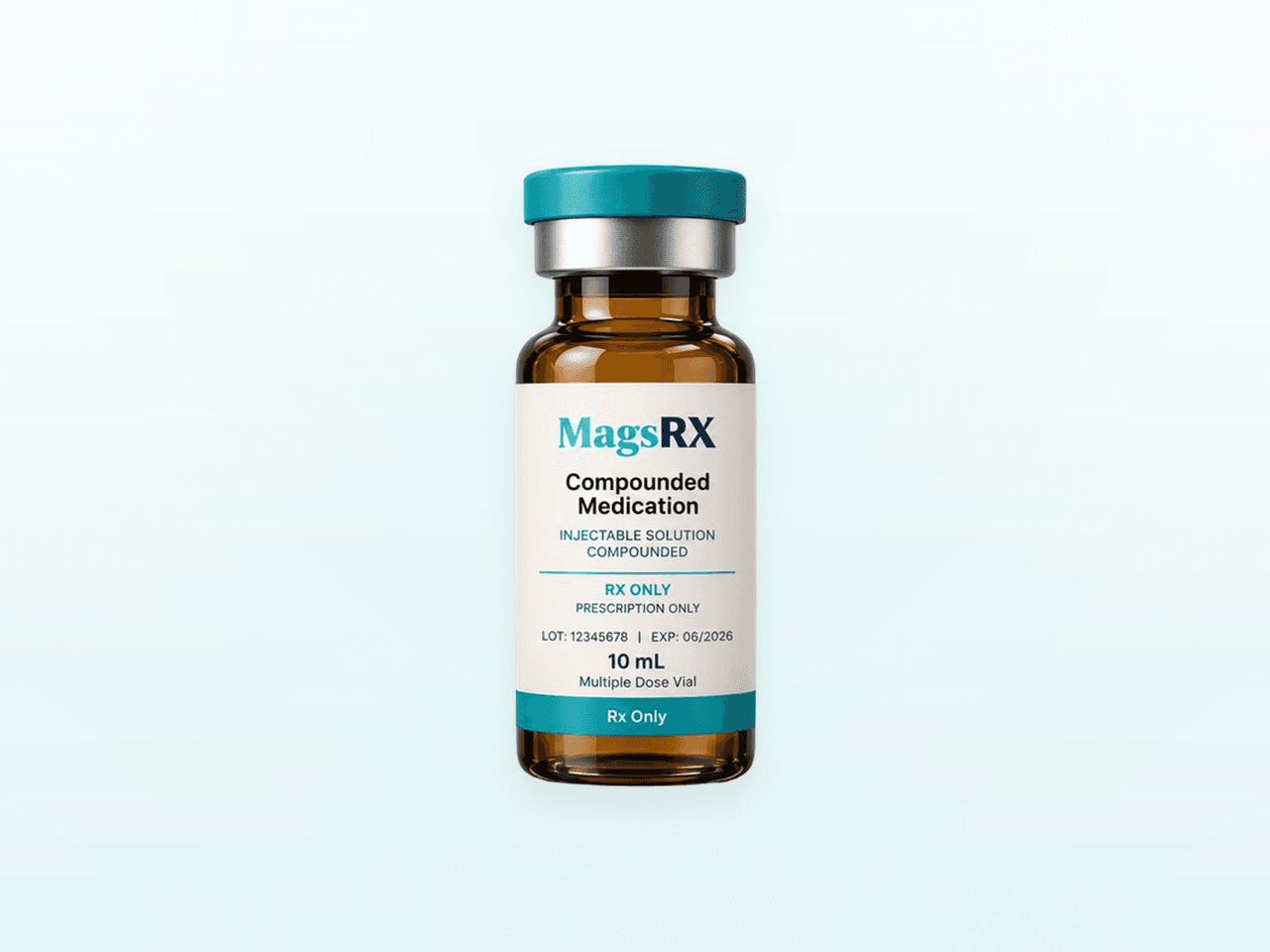
PT-141 (bremelanotide) is a melanocortin-receptor agonist studied for sexual desire and arousal. Unlike the familiar "blood-flow" medications, it is thought to act upstream — on central nervous system pathways rather than on the vasculature — which is why it has drawn clinical interest for both women and men. It is used on an as-needed basis and is prescribed only when a licensed provider determines it is clinically appropriate for you.
PT-141's defining trait is where it is believed to act. Rather than relaxing blood vessels in the periphery, bremelanotide engages melanocortin receptors in the central nervous system — the wiring associated with sexual desire itself.
Melanocortin activation
Bremelanotide binds melanocortin receptors — chiefly MC4R — concentrated in brain regions linked to sexual motivation, a signaling route entirely separate from the vascular pathways that PDE5 inhibitors target.
Central arousal signaling
By engaging these CNS pathways, PT-141 is studied for its influence on the neural drive behind desire and arousal, which is why clinical interest spans both women and men rather than a single physiology.
As-needed window
Given as a small subcutaneous injection ahead of anticipated intimacy, its effect is episodic and time-bound — it is not a daily peptide that must accumulate in the system to work.
Candidacy
A considered fit, not a funnel.
PT-141 draws interest from adults whose concern is diminished desire rather than mechanical performance — people for whom blood-flow medications either miss the point or are not the whole story. Because it is thought to act centrally, it is one of the few options a provider may explore for women as well as men. It is used situationally, so it may suit those who want something to reach for before intimacy rather than a daily regimen.
- Adults with low libido where desire — not circulation — is the concern
- Women and men seeking a centrally-acting option
- Those wanting an as-needed approach over a daily one
- Anyone with uncontrolled or poorly managed high blood pressure
- People with known cardiovascular disease
- Those who are pregnant, nursing, or trying to conceive
Expected Timeline
What to expect
PT-141 is an episodic, on-demand therapy. Your provider sets a conservative starting dose and a timing window, then refines both based on how you respond and tolerate it.
- 01
Visit 1
Provider review
A licensed provider reviews your history, blood pressure, and cardiovascular risk to decide whether PT-141 is appropriate and to set a conservative starting dose.
- 02
First uses
Timing & tolerance
Bremelanotide is self-administered subcutaneously roughly 45 minutes before anticipated intimacy. Early uses are about finding your personal timing window and gauging tolerability, including nausea.
- 03
Ongoing
Refinement
Dose and timing are adjusted for your response, with attention to how doses are spaced and how many are used within a given period rather than daily accumulation.
Response and tolerability vary considerably between individuals; your provider adjusts dose and frequency, spaces doses appropriately, and may pause therapy at any time.
The Science
Why clinicians reach for it.
Interest in PT-141 rests on a mechanism unusual among sexual-health therapies: it is studied for the brain's desire circuitry rather than the plumbing.
A melanocortin approach
Bremelanotide is a synthetic melanocortin-receptor agonist. This class has drawn research attention precisely because it is thought to operate on central pathways rather than the peripheral vasodilation that defines PDE5 inhibitors.
Studied across both sexes
Because the melanocortin route sits upstream of physiology-specific mechanics, clinical interest in bremelanotide has spanned low sexual desire in both women and men — a breadth few sexual-health agents share.
Episodic by design
Research framing treats it as an on-demand agent used ahead of activity, distinguishing it from therapies that require continuous daily dosing to be effective.
Our Standard of Care
Real transformation, with a friendly team that stands by you every step.
- 01.Provider-Supervised
- Licensed providers review your health profile and guide every treatment decision. You only move forward when a plan is right for you.
- 02.Personalized Plans
- GLP-1 and peptide protocols are titrated to your biology and your goals. No one-size-fits-all, no guesswork.
- 03.We Stand By You
- From eligibility review to ongoing check-ins, our care team supports you throughout your transformation — discreet shipping and secure messaging included.
Clinical Safety
No therapy is right for everyone.
What to know
The most commonly reported effect is nausea, particularly with early or higher doses; flushing and headache are also described. Because bremelanotide can cause a transient rise in blood pressure with a corresponding dip in heart rate after dosing, and because repeated use of melanocortin agents may be associated with focal darkening of the skin, your provider will review these before prescribing. Report any effect that concerns you.
Contraindications
PT-141 is not appropriate for people with uncontrolled hypertension or known cardiovascular disease, and should not be used by anyone who is pregnant, nursing, or trying to conceive. Share your full medication list and history — a licensed provider makes the final determination of whether it is suitable for you.
MagsRX protocols are prepared by partner compounding pharmacies in the United States. Compounding pharmacies are regulated by both state boards and the FDA and have been part of American medicine since long before mass-manufactured drugs existed. The active ingredient is prepared per your protocol — supervised by your provider — and delivered direct to your door.
Frequently Asked
Questions worth asking before you begin.
Those medications are PDE5 inhibitors that work on blood flow. PT-141 (bremelanotide) is studied for a completely different pathway — melanocortin receptors in the central nervous system that are linked to sexual desire itself — which is also why it has been explored for women as well as men.
No. PT-141 is an as-needed therapy, self-administered by a small subcutaneous injection roughly 45 minutes before anticipated intimacy rather than taken daily. Your provider sets your dose, timing window, and how doses should be spaced.
No. Because bremelanotide is thought to act on central desire pathways rather than male-specific physiology, clinical interest in it spans both women and men. Whether it is appropriate for you is determined by a licensed provider.
Explore More
Other therapies to consider.
 Tissue Repair
BPC-157
A body-protection pentadecapeptide studied for how it may support the slow-healing places — a strained tendon, an irritable gut lining, a joint that lingers.
Learn more →- GH Support
Sermorelin
A GHRH analog that asks your own pituitary to release growth hormone on its natural nightly schedule — rather than replacing the hormone from outside.
Learn more → - GH Secretagogue Stack
Ipamorelin + CJC-1295
Two peptides, two doorways into your own growth hormone — a steady GHRH signal from CJC-1295 paired with Ipamorelin's clean release trigger, tuned to work with your nightly rhythm rather than override it.
Learn more →
Begin
PT-141 begins with a short assessment.
A licensed provider reviews every order and prescribes only if it is clinically appropriate for you. Your therapy is prepared by a partner compounding pharmacy and delivered discreetly to your door.