Longevity · Cellular Energy
NAD+
Not a peptide but a coenzyme your cells run on — NAD+ replenishes the electron-carrying fuel that quietly thins as the decades add up.
Available by consultation
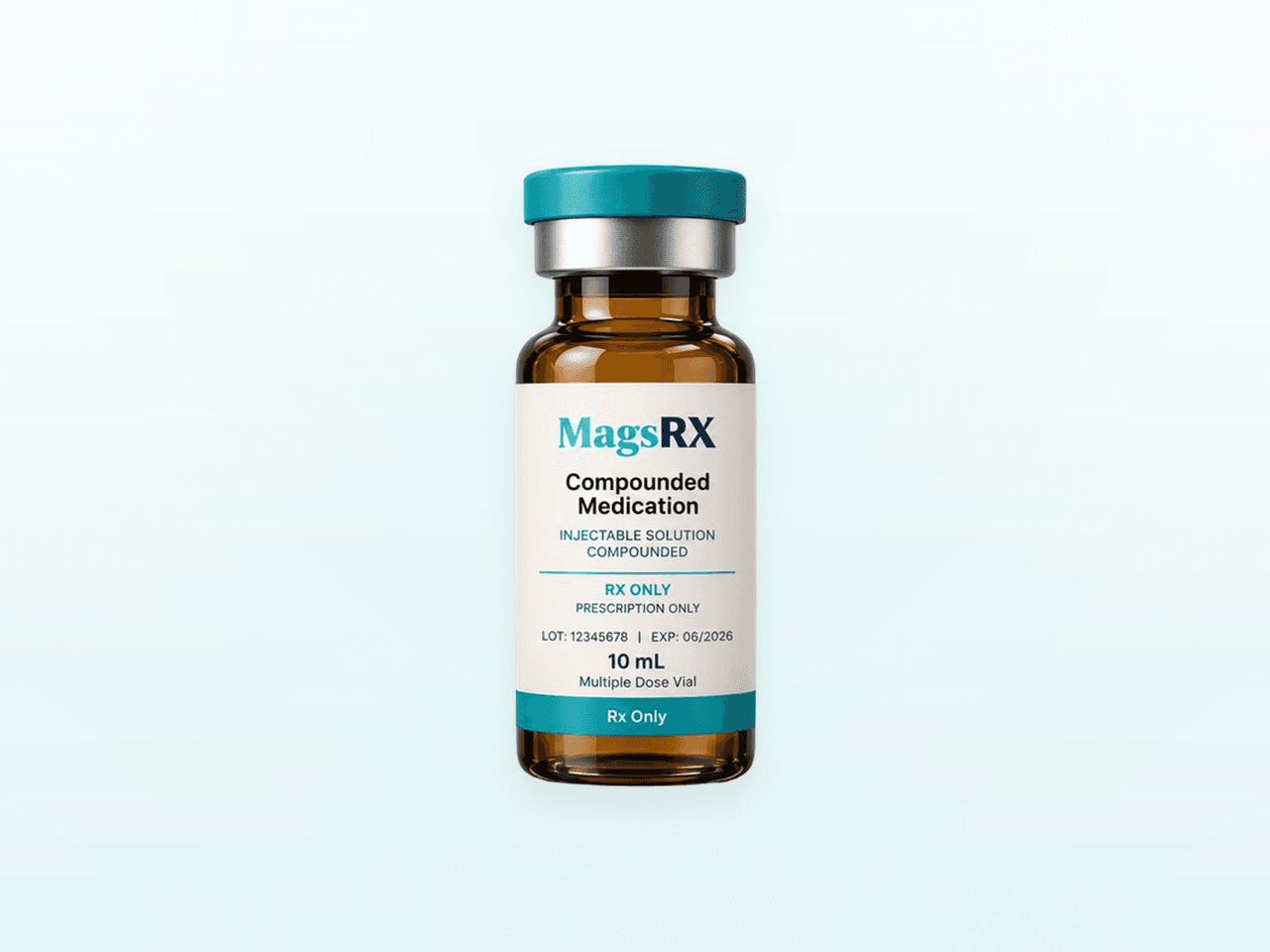
What it is
Cellular Energy
NAD+ (nicotinamide adenine dinucleotide) is a coenzyme present in every living cell, where it ferries electrons through the reactions that convert food and oxygen into usable energy. Its natural concentration tends to decline with age, which is part of why researchers study NAD+ in the context of mitochondrial performance, metabolic resilience, and mental clarity. Unlike the GHRH analogs, GH secretagogues, and repair peptides offered alongside it, NAD+ isn't a signaling molecule at all — it works at the level of core cellular metabolism rather than a single receptor or hormone axis.
NAD+ is not a switch that flips one pathway on. It is a consumable coenzyme, so restoring its supply touches energy production, redox balance, and cellular maintenance all at once.
Refill the coenzyme pool
Circulating and intracellular NAD+ levels tend to fall with age and metabolic stress. Replenishment aims to restore the available pool so downstream reactions are no longer supply-limited.
Shuttle electrons for ATP
NAD+ cycles to NADH and back as it carries electrons into the mitochondria, driving the oxidative phosphorylation that produces ATP — the reason NAD+ is framed around cellular energy rather than any hormone effect.
Power maintenance enzymes
NAD+ is the obligatory substrate for sirtuins and PARPs — enzyme families involved in DNA-repair signaling and cellular housekeeping — which is the mechanistic basis for the longevity interest around this molecule.
Candidacy
A considered fit, not a funnel.
NAD+ tends to draw adults who feel their baseline energy and sharpness have dimmed with age and who are curious about cellular-level optimization rather than a targeted body-composition or recovery goal. Because it is metabolic rather than hormonal, it is often explored on its own or as a foundation alongside other therapies. A licensed provider reviews your history and decides whether compounded NAD+ is clinically appropriate for you.
- Adults noticing age-related dips in energy and mental clarity
- Those drawn to cellular and mitochondrial optimization
- People seeking a non-hormonal foundation for a longevity routine
- Anyone who is pregnant or breastfeeding
- People with a known hypersensitivity to NAD+ or its precursors
- Those wanting a hormone or GH-axis therapy — NAD+ is neither
Expected Timeline
What to expect
NAD+ protocols are typically front-loaded — a closer-spaced early series to rebuild the pool, then a lighter maintenance rhythm. Dosing and route are set by your provider.
- 01
Weeks 1-2
Loading series
A more frequent early series is common so intracellular NAD+ can be built back up. Because rapid delivery can feel intense, dosing usually starts conservatively and is titrated to comfort.
- 02
Weeks 3-6
Finding your rhythm
As the loading phase settles, some people describe steadier daytime energy and clearer focus. Your provider adjusts frequency based on how you respond and tolerate it.
- 03
Ongoing
Maintenance
A spaced maintenance cadence aims to hold the coenzyme pool over time rather than chase a peak, keeping the routine sustainable at a lower frequency.
Response and tolerance vary considerably between individuals; your provider titrates dose, route, and frequency accordingly. NAD+ is a compounded medication dispensed only when clinically appropriate.
The Science
Why clinicians reach for it.
Interest in NAD+ sits at the intersection of energy metabolism and aging biology, where a body of laboratory and translational research continues to develop.
Sirtuin and PARP biology
NAD+ is the obligatory fuel for sirtuins and PARP enzymes, and research interest centers on how restoring NAD+ availability may support these repair- and metabolism-linked pathways.
The age-related decline
Studies have observed that NAD+ levels tend to fall with age, partly driven by rising consumption from enzymes such as CD38 — the observation that motivates replenishment strategies.
Mitochondrial energetics
Because the NAD+/NADH couple is central to how mitochondria generate ATP, much of the study around NAD+ examines its role in cellular energy output and metabolic resilience.
Our Standard of Care
Real transformation, with a friendly team that stands by you every step.
- 01.Provider-Supervised
- Licensed providers review your health profile and guide every treatment decision. You only move forward when a plan is right for you.
- 02.Personalized Plans
- GLP-1 and peptide protocols are titrated to your biology and your goals. No one-size-fits-all, no guesswork.
- 03.We Stand By You
- From eligibility review to ongoing check-ins, our care team supports you throughout your transformation — discreet shipping and secure messaging included.
Clinical Safety
No therapy is right for everyone.
What to know
The most commonly noted effects relate to delivery speed and can include flushing, warmth, nausea, lightheadedness, headache, or a sensation of chest or facial pressure when given too quickly — which is why dosing is titrated slowly. Injection or infusion-site reactions may also occur.
Contraindications
NAD+ is not appropriate during pregnancy or breastfeeding, or for anyone with a known hypersensitivity to NAD+ or its precursors. Share your full medical history and medication list so your provider can assess suitability; it is prescribed only when clinically appropriate.
MagsRX protocols are prepared by partner compounding pharmacies in the United States. Compounding pharmacies are regulated by both state boards and the FDA and have been part of American medicine since long before mass-manufactured drugs existed. The active ingredient is prepared per your protocol — supervised by your provider — and delivered direct to your door.
Frequently Asked
Questions worth asking before you begin.
No. NAD+ is a coenzyme found naturally in every cell, not a peptide. Rather than signaling a specific receptor or hormone axis, it acts as a fundamental fuel for energy metabolism and cellular-maintenance enzymes.
Rapid delivery of NAD+ can produce transient flushing, nausea, or chest pressure. Providers typically start low and titrate up so your body adjusts comfortably, which is also why an early loading series is spaced closely.
Yes. The NAD+ offered here is a compounded medication, prescribed only after a licensed provider reviews your history and determines it is clinically appropriate for you.
Explore More
Other therapies to consider.
 Tissue Repair
BPC-157
A body-protection pentadecapeptide studied for how it may support the slow-healing places — a strained tendon, an irritable gut lining, a joint that lingers.
Learn more →- GH Support
Sermorelin
A GHRH analog that asks your own pituitary to release growth hormone on its natural nightly schedule — rather than replacing the hormone from outside.
Learn more → - GH Secretagogue Stack
Ipamorelin + CJC-1295
Two peptides, two doorways into your own growth hormone — a steady GHRH signal from CJC-1295 paired with Ipamorelin's clean release trigger, tuned to work with your nightly rhythm rather than override it.
Learn more →
Begin
NAD+ begins with a short assessment.
A licensed provider reviews every order and prescribes only if it is clinically appropriate for you. Your therapy is prepared by a partner compounding pharmacy and delivered discreetly to your door.