Longevity · Skin & Cellular Aging
GHK-Cu / Epithalon
A two-layer aging stack: GHK-Cu, the copper tripeptide that remodels the skin you see, paired with Epithalon, a pineal tetrapeptide that adds a circadian, longevity dimension GHK-Cu alone never touches.
Available by consultation
What it is
Skin & Longevity
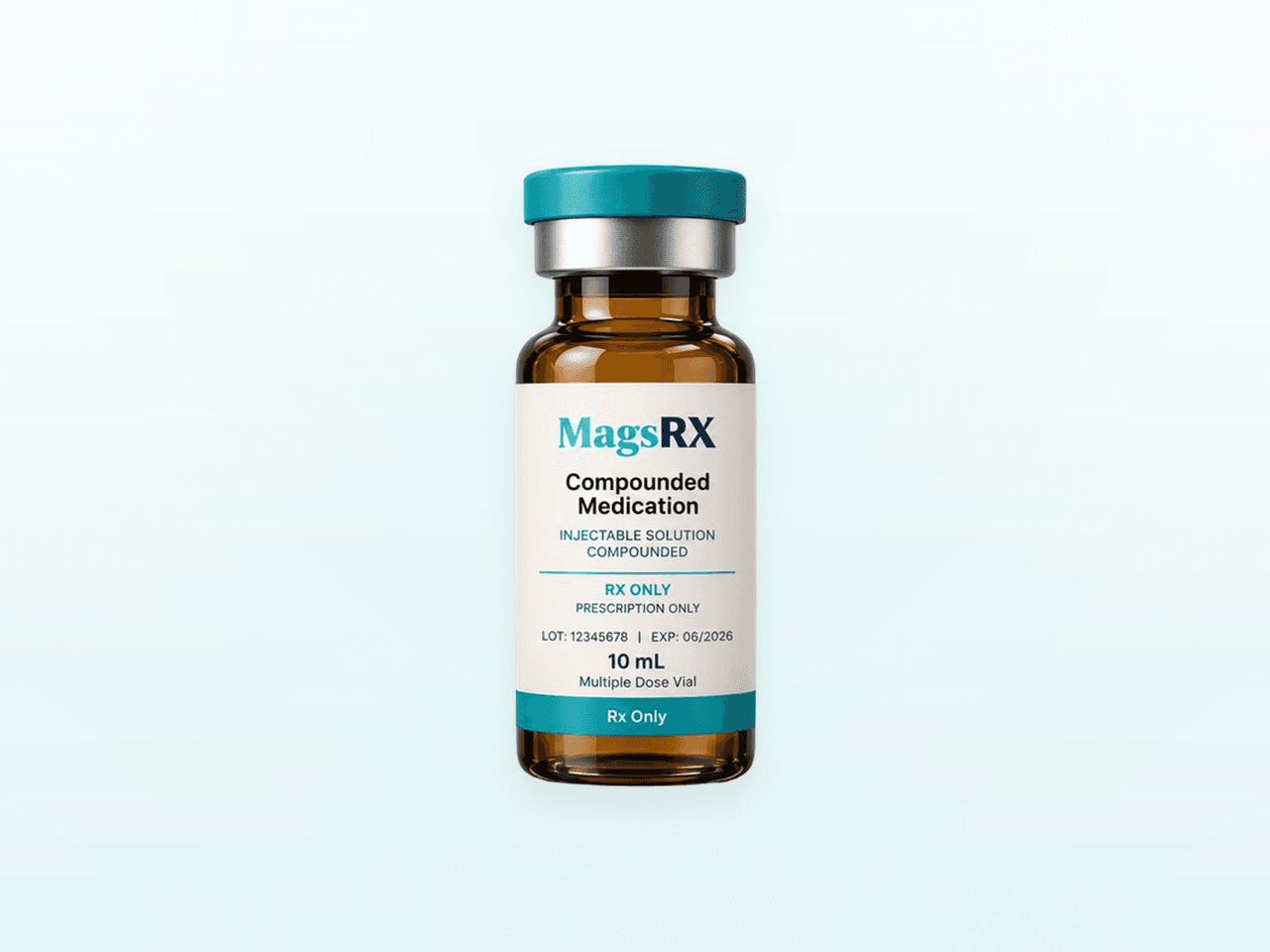
This is a paired protocol, not a single molecule. GHK-Cu is glycyl-L-histidyl-L-lysine — a tripeptide the body makes naturally and produces less of with age — bound to a copper(II) ion, and it is studied for carrying bioavailable copper to the fibroblasts and enzymes that rebuild the dermal matrix, with research interest in skin firmness, tone, and hair-follicle activity. Epithalon is a separate synthetic tetrapeptide (Ala-Glu-Asp-Gly) modeled on epithalamin, a pineal-gland extract; it is studied not for the skin at all, but for the body's aging cadence — the pineal-melatonin rhythm that governs sleep, with additional research interest in telomerase activity. Where standalone GHK-Cu addresses the surface you see in the mirror, adding Epithalon layers in an inward, circadian-and-cellular angle on aging. When clinically appropriate, a licensed provider may prescribe the two together in compounded form.
The two peptides work on entirely different fronts, which is the point of running them together — GHK-Cu rebuilds tissue from the outside in, Epithalon addresses aging's timing from the inside out. Neither acts on the growth-hormone axis, which sets this stack apart from GH-secretagogue or repair peptides.
GHK-Cu: the copper courier
The glycyl-histidyl-lysine sequence binds a copper(II) ion and delivers it in a form skin cells can use. Copper is an essential cofactor for lysyl oxidase — the enzyme that cross-links collagen and elastin — so GHK-Cu is studied for prompting dermal fibroblasts to refresh the collagen, elastin, and glycosaminoglycan scaffold that gives skin its firmness. This is the visible, aesthetic layer of the stack.
Epithalon: the circadian regulator
Modeled on the pineal peptide epithalamin, Epithalon is studied for acting on the pineal gland and its melatonin rhythm — the body's internal clock. Research interest also centers on its studied influence on telomerase, the enzyme that maintains the protective caps on chromosomes. This is the cellular-aging and sleep layer that distinguishes the pairing from GHK-Cu alone.
Why the two are paired
GHK-Cu works locally in the dermis; Epithalon works systemically on rhythm and cellular aging. Together they aim at aging from both directions at once — the skin's structural quality and the circadian, longevity cadence underneath it — rather than the single surface-level focus of a copper peptide run on its own.
Candidacy
A considered fit, not a funnel.
This stack tends to suit adults who want more than a skin peptide — people focused on how they look but equally on how they sleep and age at the cellular level. If your goal is purely dermal, GHK-Cu alone may be enough; the reason to add Epithalon is a longevity and circadian dimension. It is a compounded, provider-gated protocol, dispensed only after a licensed provider reviews your history and copper status and confirms both peptides are appropriate for you.
- Adults pairing visible skin-quality goals with an interest in sleep and cellular aging
- Those drawn to Epithalon's longevity-and-circadian angle, not GHK-Cu skin remodeling alone
- People who prefer a locally acting copper peptide plus a rhythm-regulating pineal peptide over hormonal pathways
- Anyone with Wilson's disease or another copper-metabolism disorder, or known copper hypersensitivity (from the GHK-Cu component)
- People with an active or recent malignancy — the telomerase research interest around Epithalon is a theoretical concern
- Those who are pregnant, breastfeeding, or trying to conceive
Expected Timeline
What to expect
The two peptides often run on different clocks. GHK-Cu favors steady, consistent dosing because dermal remodeling is gradual, while Epithalon is commonly given in short, defined courses rather than continuously. Your provider sets how the two are sequenced.
- 01
Weeks 1-2
Onboarding
Intake and medical review, including copper status and any liver history for the GHK-Cu component. If prescribed, your compounded formulations ship with dosing guidance and technique, and your provider explains how the two peptides are scheduled together.
- 02
Weeks 3-8
Build & course
GHK-Cu is dosed steadily while fibroblasts ramp collagen and glycosaminoglycan output — early changes people describe tend to be in texture and hydration. Epithalon is often run here as a defined course rather than open-ended, with sleep and recovery among the first things people notice.
- 03
Weeks 8-16+
Remodel, cycle & reassess
Skin firmness and follicle changes may keep accumulating as the dermal scaffold reorganizes, while Epithalon is typically cycled — a course, then a pause — rather than taken indefinitely. Your provider reviews response and adjusts each peptide on its own cadence.
Response varies with skin condition, age, sleep, and copper status. Because GHK-Cu and Epithalon are separate compounded peptides on different schedules, your provider individualizes the dose, route, and duration of each and may pause or adjust either at any check-in. The cadence above is illustrative, not a promise of any result.
The Science
Why clinicians reach for it.
The two halves of this stack have very different evidence bases, and we describe both honestly — no invented trials or promised outcomes. GHK-Cu is one of the more characterized copper peptides; Epithalon's human data is far more limited and early-stage.
GHK-Cu: a copper peptide that declines with age
GHK is present in human plasma and is generally reported to fall from youth toward middle age. Its high-affinity copper binding feeds the enzymes that cross-link and mature collagen and elastin, tying its studied effects to skin-matrix quality — the better-characterized, aesthetic half of the pairing.
Epithalon: a pineal-derived longevity peptide
Epithalon was developed from epithalamin, a pineal-gland extract, and research interest centers on its studied effects on melatonin rhythm and telomerase activity. The evidence is largely early-stage and preclinical, which is exactly why it remains a compounded, provider-gated option rather than an established therapy.
Not FDA-approved
Neither GHK-Cu nor Epithalon is an FDA-approved drug. Both are available only through compounding when a licensed provider deems them appropriate, and should be viewed as emerging, supportive therapies — not proven treatments for any condition.
Our Standard of Care
Real transformation, with a friendly team that stands by you every step.
- 01.Provider-Supervised
- Licensed providers review your health profile and guide every treatment decision. You only move forward when a plan is right for you.
- 02.Personalized Plans
- GLP-1 and peptide protocols are titrated to your biology and your goals. No one-size-fits-all, no guesswork.
- 03.We Stand By You
- From eligibility review to ongoing check-ins, our care team supports you throughout your transformation — discreet shipping and secure messaging included.
Clinical Safety
No therapy is right for everyone.
What to know
Both peptides are generally reported as well tolerated. With GHK-Cu, the most commonly described effects are mild, localized injection-site reactions — redness, tenderness, or transient itching — and providers dose mindful of cumulative copper exposure. Epithalon's human safety data is limited; some people report shifts in sleep or vivid dreams as its circadian effect is studied. Report any new or persistent symptom to your provider promptly.
Contraindications
This stack is not appropriate for anyone with Wilson's disease or other copper-metabolism disorders, or with known copper or peptide hypersensitivity (from the GHK-Cu component). Given the telomerase research interest around Epithalon, it is generally avoided in anyone with an active or recent malignancy. Neither peptide is used during pregnancy or breastfeeding. Share your full medical history, any liver conditions, and all medications and supplements — including other copper-containing products — during intake.
MagsRX protocols are prepared by partner compounding pharmacies in the United States. Compounding pharmacies are regulated by both state boards and the FDA and have been part of American medicine since long before mass-manufactured drugs existed. The active ingredient is prepared per your protocol — supervised by your provider — and delivered direct to your door.
Frequently Asked
Questions worth asking before you begin.
GHK-Cu alone is a skin-and-follicle peptide — a copper tripeptide studied for dermal firmness, tone, and hair. Adding Epithalon layers in something GHK-Cu cannot do: a circadian and cellular-aging dimension, studied for the pineal-melatonin sleep rhythm and, in research interest, telomerase. You choose the stack when your goals extend past the mirror to sleep and longevity.
Epithalon is a pineal-derived tetrapeptide (Ala-Glu-Asp-Gly) that works on the body's internal clock rather than the skin. It is studied for supporting melatonin rhythm and sleep, with additional research interest in telomerase activity. It contributes the inward, longevity-oriented half of the pairing, while GHK-Cu handles the visible, dermal half.
Yes — both are compounded medications dispensed only after a licensed provider reviews your intake and confirms they are appropriate. Because they act on different systems and often follow different schedules, your provider may run GHK-Cu steadily while cycling Epithalon in courses, and can adjust either one independently. Neither is sold over the counter here.
Explore More
Other therapies to consider.
 Tissue Repair
BPC-157
A body-protection pentadecapeptide studied for how it may support the slow-healing places — a strained tendon, an irritable gut lining, a joint that lingers.
Learn more →- GH Support
Sermorelin
A GHRH analog that asks your own pituitary to release growth hormone on its natural nightly schedule — rather than replacing the hormone from outside.
Learn more → - GH Secretagogue Stack
Ipamorelin + CJC-1295
Two peptides, two doorways into your own growth hormone — a steady GHRH signal from CJC-1295 paired with Ipamorelin's clean release trigger, tuned to work with your nightly rhythm rather than override it.
Learn more →
Begin
GHK-Cu / Epithalon begins with a short assessment.
A licensed provider reviews every order and prescribes only if it is clinically appropriate for you. Your therapy is prepared by a partner compounding pharmacy and delivered discreetly to your door.