Peptide · Skin, Hair & Anti-Aging
GHK-Cu
A copper-carrying tripeptide your body already makes — and makes less of with each decade — studied for how it helps skin remodel and follicles reawaken.
Available by consultation
What it is
Skin & Hair
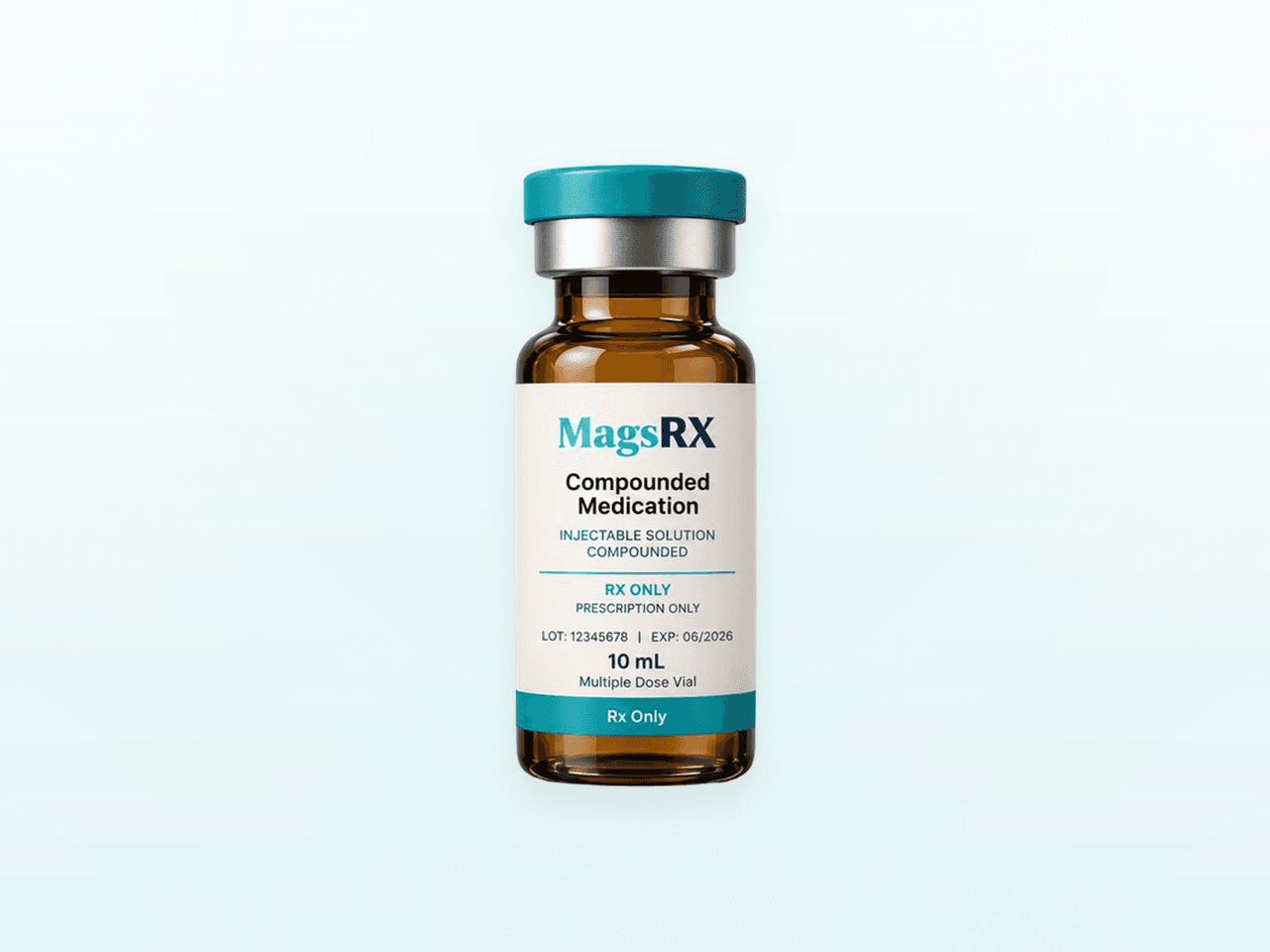
GHK-Cu is glycyl-L-histidyl-L-lysine bound to a single copper ion — a small peptide that circulates naturally in human plasma and whose concentration tends to decline with age. Unlike GHRH analogs such as Sermorelin that work through the pituitary, or body-protection peptides like BPC-157 aimed at gut and tendon, GHK-Cu is studied for acting locally in the skin, carrying bioavailable copper to the fibroblasts and enzymes that maintain the dermal matrix. When clinically appropriate, a licensed provider may prescribe it in a compounded form to support skin firmness, tone, and hair-follicle activity.
GHK-Cu is best understood as a copper courier. Its defining job is to bind copper with high affinity and place it where the skin's rebuilding machinery can use it.
Copper capture & delivery
The glycyl-histidyl-lysine sequence binds a copper(II) ion and carries it in a form skin cells can take up. Copper is an essential cofactor for lysyl oxidase — the enzyme that cross-links collagen and elastin — and for antioxidant enzymes in the dermis.
Fibroblast & matrix signaling
The complex is studied for prompting dermal fibroblasts to synthesize collagen, elastin, and glycosaminoglycans such as dermatan sulfate, which may help refresh the extracellular scaffold that gives skin its firmness and bounce.
Regenerative gene expression
Research interest centers on GHK-Cu's studied ability to shift the expression of a broad set of genes toward a repair-and-remodel state and to attract healing cells — a copper-linked signaling role rather than a hormone-driven one.
Candidacy
A considered fit, not a funnel.
GHK-Cu tends to interest adults who see aging in the mirror and the hairline rather than on the scale — people focused on skin quality, elasticity, and follicle health rather than fat loss or muscle. Because it is compounded and copper-based, it is dispensed only after a licensed provider reviews your history and confirms it is appropriate for you.
- Adults noticing loss of skin firmness, tone, or texture with age
- Those interested in follicle and scalp support alongside skin quality
- People who prefer a locally acting peptide over hormonal pathways
- Anyone with Wilson's disease or another copper-metabolism disorder
- Known copper hypersensitivity or allergy to the peptide
- Those who are pregnant, breastfeeding, or trying to conceive
Expected Timeline
What to expect
Skin and follicle remodeling is gradual by nature — the dermal matrix rebuilds on a timeline of weeks, not days — so GHK-Cu protocols favor steady, consistent dosing over quick cycles.
- 01
Weeks 1-2
Onboarding
Intake and medical review, including your copper status and any liver history, since GHK-Cu carries copper. If prescribed, your compounded formulation ships with dosing guidance and technique for its prescribed route.
- 02
Weeks 3-8
Matrix build
Consistent daily or several-times-weekly dosing while fibroblasts ramp collagen and glycosaminoglycan output. Early changes tend to show in texture and hydration rather than dramatic firming.
- 03
Weeks 8-16+
Remodel & reassess
Firmness, tone, and follicle changes may continue to accumulate as the dermal scaffold reorganizes. Your provider reviews response and adjusts or cycles the protocol.
Response to GHK-Cu varies with skin condition, age, and copper status; your provider individualizes dose, route, and duration and may pause or adjust at any check-in.
The Science
Why clinicians reach for it.
GHK-Cu is one of the more extensively characterized copper peptides, with a research literature rooted in its natural presence in the body and its studied role in tissue remodeling.
A peptide that declines with age
GHK is present in human plasma at meaningful levels in youth and tends to fall by middle age — a decline that motivated much of the interest in restoring it for skin and repair.
A copper-dependent remodeler
Its high-affinity copper binding is central to its studied effects; copper feeds the very enzymes that cross-link and mature collagen and elastin, tying the peptide's activity to matrix quality.
Broad regenerative signaling
Investigators have explored GHK-Cu for its studied capacity to modulate a wide range of genes involved in wound healing, antioxidant defense, and tissue regeneration — a signaling breadth unusual for so small a molecule.
Our Standard of Care
Real transformation, with a friendly team that stands by you every step.
- 01.Provider-Supervised
- Licensed providers review your health profile and guide every treatment decision. You only move forward when a plan is right for you.
- 02.Personalized Plans
- GLP-1 and peptide protocols are titrated to your biology and your goals. No one-size-fits-all, no guesswork.
- 03.We Stand By You
- From eligibility review to ongoing check-ins, our care team supports you throughout your transformation — discreet shipping and secure messaging included.
Clinical Safety
No therapy is right for everyone.
What to know
GHK-Cu is generally well tolerated. When given by injection, the most common effects are mild, localized reactions at the site — redness, tenderness, or transient itching. Because it delivers copper, providers are mindful of cumulative copper exposure and dose accordingly.
Contraindications
GHK-Cu is not appropriate for people with Wilson's disease or other disorders of copper metabolism, or with known copper or peptide hypersensitivity. It is not used during pregnancy or breastfeeding. Share any liver conditions and your full medication and supplement list, including other copper-containing products, during intake.
MagsRX protocols are prepared by partner compounding pharmacies in the United States. Compounding pharmacies are regulated by both state boards and the FDA and have been part of American medicine since long before mass-manufactured drugs existed. The active ingredient is prepared per your protocol — supervised by your provider — and delivered direct to your door.
Frequently Asked
Questions worth asking before you begin.
They target different tissues by different mechanisms. BPC-157 is a body-protection pentadecapeptide studied for gut lining, tendon, and internal healing, while GHK-Cu is a copper tripeptide studied for acting in the skin — using copper delivery to support dermal remodeling, tone, and follicle activity. Some patients discuss both with their provider for complementary goals.
No. Unlike GHRH analogs such as Sermorelin or Tesamorelin, GHK-Cu does not touch the pituitary or growth-hormone axis. It works locally as a copper-binding signaling peptide, which is part of why its focus is skin and hair rather than body composition.
Yes. GHK-Cu is a compounded medication dispensed only after a licensed provider reviews your intake and determines it is clinically appropriate for you. It is never sold over the counter here.
Explore More
Other therapies to consider.
 Tissue Repair
BPC-157
A body-protection pentadecapeptide studied for how it may support the slow-healing places — a strained tendon, an irritable gut lining, a joint that lingers.
Learn more →- GH Support
Sermorelin
A GHRH analog that asks your own pituitary to release growth hormone on its natural nightly schedule — rather than replacing the hormone from outside.
Learn more → - GH Secretagogue Stack
Ipamorelin + CJC-1295
Two peptides, two doorways into your own growth hormone — a steady GHRH signal from CJC-1295 paired with Ipamorelin's clean release trigger, tuned to work with your nightly rhythm rather than override it.
Learn more →
Begin
GHK-Cu begins with a short assessment.
A licensed provider reviews every order and prescribes only if it is clinically appropriate for you. Your therapy is prepared by a partner compounding pharmacy and delivered discreetly to your door.