Longevity · Cellular Aging & Circadian
Epithalon
A pineal-derived tetrapeptide studied for telomerase activity and the body's own aging clock — the sleep-and-longevity peptide, not a growth-hormone or tissue-repair one.
Available by consultation
What it is
Longevity
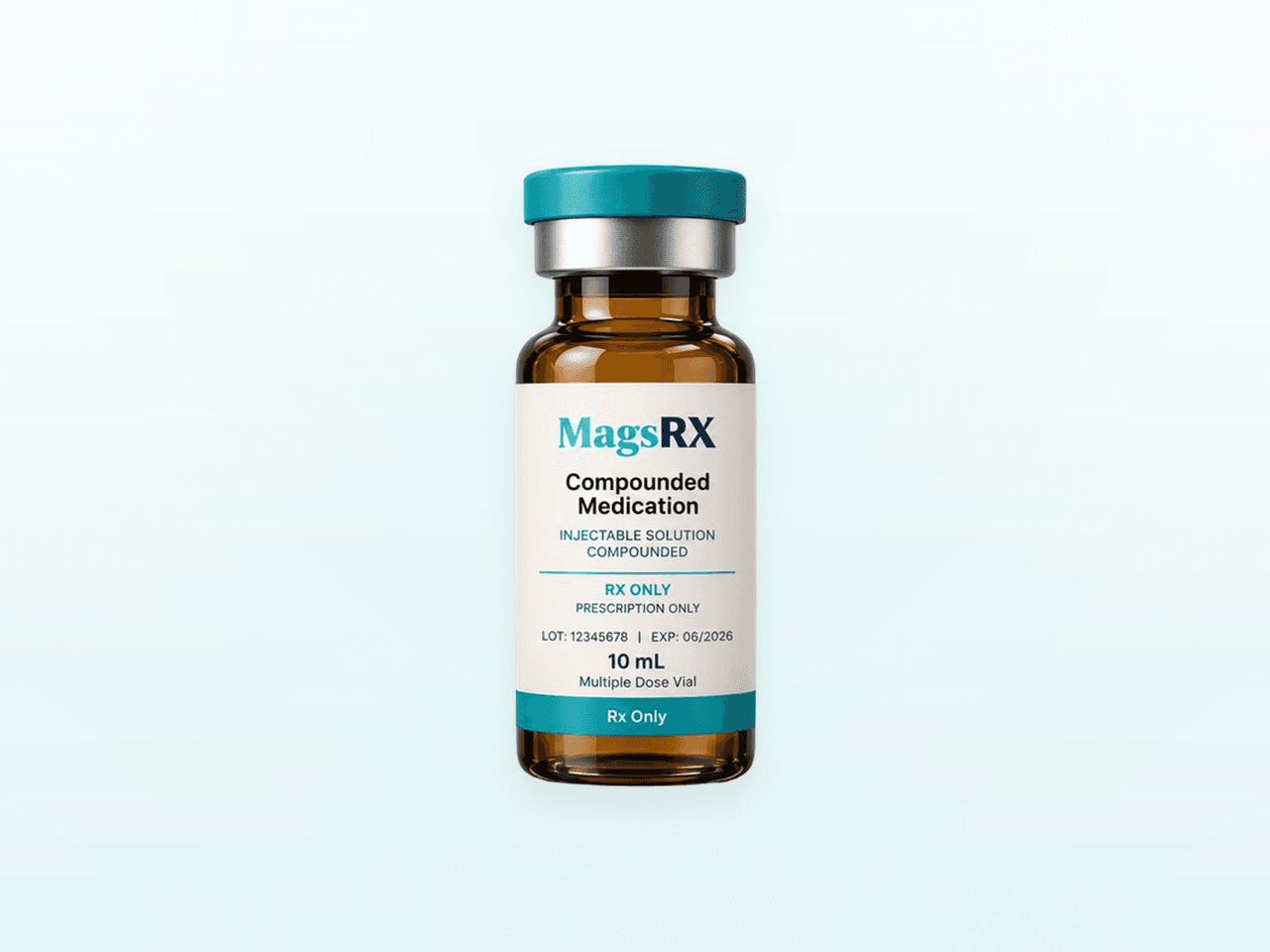
Epithalon (also written Epitalon) is a synthetic four-amino-acid peptide — Ala-Glu-Asp-Gly — modeled on Epithalamin, a substance originally extracted from the pineal gland. It sits in a category of its own on this menu: where Sermorelin and Ipamorelin work the growth-hormone axis and BPC-157 focuses on localized tissue repair, Epithalon is studied for telomerase activity, pineal-gland signaling, and the circadian rhythm that governs melatonin and deep sleep. It is a compounded, provider-prescribed therapy, offered only when a licensed clinician determines it is clinically appropriate for you.
Epithalon is thought to act as a regulatory peptide on the pineal gland and on gene expression tied to cellular aging — a mechanism unlike releasing growth hormone or rebuilding a strained tendon. Its telomere and circadian focus is what defines it against every other peptide here.
Telomerase interest
The best-known research thread is Epithalon's studied influence on telomerase — the enzyme that extends telomeres, the protective caps on chromosomes that shorten as cells divide. This is the specific reason it is framed as a longevity peptide rather than a recovery or GH-support one.
Pineal & circadian regulation
Derived from a pineal extract, Epithalon is studied for helping normalize the pineal gland's melatonin rhythm. That circadian angle is why it is so often discussed alongside deeper sleep and an aging clock, and why it does not overlap with the fat-loss or muscle goals of the metabolic and GH peptides.
Gene-expression signaling
Rather than fueling metabolism the way the coenzyme NAD+ does, Epithalon is explored as a signaling peptide that may influence the expression of certain age-related genes and antioxidant defenses — a regulatory role, studied largely in preclinical models.
Candidacy
A considered fit, not a funnel.
Epithalon tends to draw adults whose interest is healthy aging, sleep quality, and long-horizon cellular resilience — a different intention than someone pursuing lean mass from a GH peptide, fat loss from Tesamorelin, or joint recovery from BPC-157. It is used to support the aging and circadian side of wellness, never as a treatment for any disease and never as a promise of extended lifespan. A provider reviews your history and goals to decide whether it is a sensible fit.
- Adults focused on healthy-aging and cellular-longevity goals
- People whose sleep quality and circadian rhythm feel off
- Those wanting a non-hormonal, non-GH approach to aging support
- Anyone with an active or recent cancer diagnosis (telomerase signaling is a theoretical concern)
- People who are pregnant or breastfeeding
- Anyone with a known hypersensitivity to the peptide or diluent
Expected Timeline
What to expect
Epithalon is characteristically run in short, cyclical courses rather than continuously — the pineal-and-telomere research tradition favors concentrated pulses with long breaks in between, quite unlike the steady daily cadence of a GH or repair peptide.
- 01
Days 1–10
Cycle course
Your provider typically establishes a defined course — often a short run of consecutive subcutaneous doses — and confirms tolerability. Many patients note the sleep-and-rhythm effects are what they watch for first.
- 02
Weeks 2–12
Rest interval
A deliberate off-period follows the course. Unlike daily peptides, Epithalon is generally not taken continuously; the long gap is part of how these longevity protocols are traditionally structured.
- 03
2–4× per year
Repeat cycling
Rather than an open-ended regimen, providers commonly repeat the short course a few times a year and reassess. Your prescriber decides whether, when, and how often to cycle based on your goals and response.
Response varies from person to person, and Epithalon is a compounded, provider-directed therapy. Your protocol, dose, route, and cycling schedule are set and adjusted by your prescriber — the cadence above is illustrative, not a promise of any particular result, including any effect on lifespan.
The Science
Why clinicians reach for it.
The evidence base for Epithalon is largely preclinical and early-stage, with much of the original work rooted in pineal-peptide research. We describe the direction of that research honestly — no invented trials, no promised outcomes, and no claim it extends human life.
Rooted in a pineal peptide
Epithalon is a synthetic version of a sequence linked to Epithalamin, a pineal-gland extract. That origin is why the research centers on circadian rhythm, melatonin regulation, and aging rather than on muscle, metabolism, or tissue repair.
Telomere and aging curiosity
There is genuine scientific interest in its studied effect on telomerase and telomere maintenance, explored mostly in cell and animal models rather than large, definitive human trials — part of why it remains a compounded, provider-gated option.
Not FDA-approved
Epithalon is not an FDA-approved drug and is available only through compounding when a licensed provider deems it appropriate. It should be viewed as an emerging, supportive longevity option — not an established treatment for aging or any condition.
Our Standard of Care
Real transformation, with a friendly team that stands by you every step.
- 01.Provider-Supervised
- Licensed providers review your health profile and guide every treatment decision. You only move forward when a plan is right for you.
- 02.Personalized Plans
- GLP-1 and peptide protocols are titrated to your biology and your goals. No one-size-fits-all, no guesswork.
- 03.We Stand By You
- From eligibility review to ongoing check-ins, our care team supports you throughout your transformation — discreet shipping and secure messaging included.
Clinical Safety
No therapy is right for everyone.
What to know
Reported effects are generally mild and may include irritation, redness, or discomfort at the injection site, and occasionally drowsiness or vivid dreams that reflect its circadian activity. Because human safety data is limited, any new or persistent symptom should be reported to your provider promptly.
Contraindications
Not appropriate during pregnancy or breastfeeding, or for anyone with a known hypersensitivity to the peptide or diluent. Given its studied influence on telomerase, it is generally avoided in anyone with an active or recent malignancy. Share your full medical history — including any cancer history and current medications — so your provider can assess suitability.
MagsRX protocols are prepared by partner compounding pharmacies in the United States. Compounding pharmacies are regulated by both state boards and the FDA and have been part of American medicine since long before mass-manufactured drugs existed. The active ingredient is prepared per your protocol — supervised by your provider — and delivered direct to your door.
Frequently Asked
Questions worth asking before you begin.
No. It does not act on the GHRH axis or release growth hormone the way Sermorelin or Ipamorelin do, and it is not proven to extend human lifespan. Its studied pathways are telomerase activity and pineal-driven circadian rhythm — a longevity-and-sleep focus that makes it distinct from the GH, metabolic, and repair peptides on our menu.
NAD+ is a coenzyme that fuels cellular energy metabolism directly. Epithalon is a signaling tetrapeptide studied for telomere maintenance and pineal circadian regulation — a regulatory role, not an energy substrate. They approach 'aging' from entirely different angles, which is why some patients explore them for different goals.
The pineal-peptide research tradition Epithalon comes from favors short, pulsed courses with long rest intervals rather than continuous daily dosing. Your provider sets the cycle length and how often it repeats based on your goals and how you respond.
Explore More
Other therapies to consider.
 Tissue Repair
BPC-157
A body-protection pentadecapeptide studied for how it may support the slow-healing places — a strained tendon, an irritable gut lining, a joint that lingers.
Learn more →- GH Support
Sermorelin
A GHRH analog that asks your own pituitary to release growth hormone on its natural nightly schedule — rather than replacing the hormone from outside.
Learn more → - GH Secretagogue Stack
Ipamorelin + CJC-1295
Two peptides, two doorways into your own growth hormone — a steady GHRH signal from CJC-1295 paired with Ipamorelin's clean release trigger, tuned to work with your nightly rhythm rather than override it.
Learn more →
Begin
Epithalon begins with a short assessment.
A licensed provider reviews every order and prescribes only if it is clinically appropriate for you. Your therapy is prepared by a partner compounding pharmacy and delivered discreetly to your door.