Peptide · Recovery & Sleep
DSIP / BPC / CJC
Three peptides on one nightly window — DSIP to deepen sleep, CJC-1295 to support the overnight GH pulse, and BPC-157 for repair while you sleep.
Available by consultation
What it is
Overnight Recovery Stack
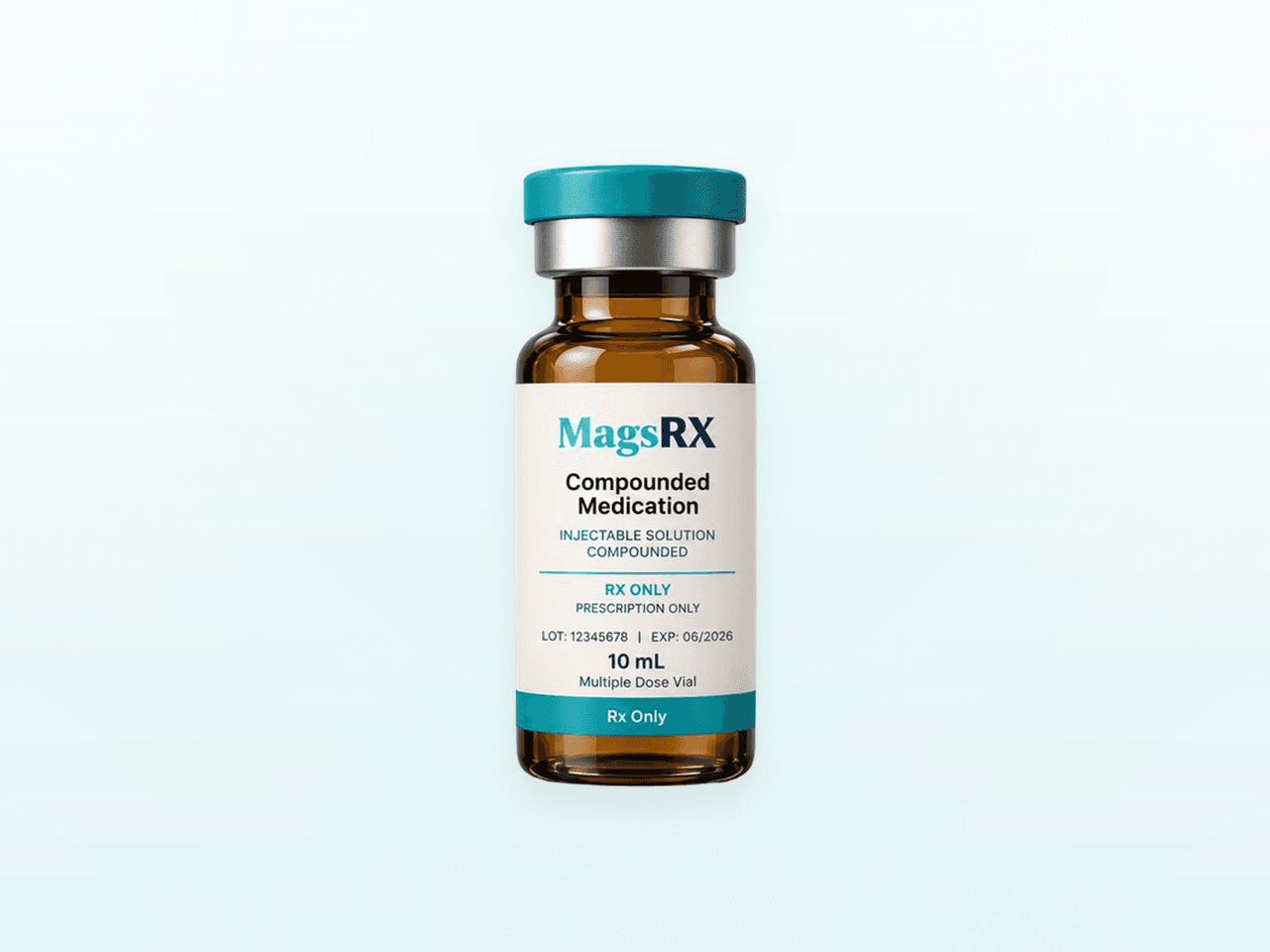
DSIP / BPC / CJC is a compounded overnight recovery stack that pairs three peptides around a single idea: the body does much of its repair while you sleep, so reinforce all three parts of that process at once. DSIP (Delta Sleep-Inducing Peptide) is a naturally occurring nonapeptide studied for its association with slow-wave, delta-stage sleep. CJC-1295 is a long-acting GHRH analog that acts on your pituitary to help extend the window in which it stays primed to release growth hormone, aligned with the surge that crests during deep sleep. BPC-157 is a "body protection compound" pentadecapeptide studied for connective-tissue and gut-lining repair. Where our standalone BPC-157 page is about localized daytime healing and the Ipamorelin + CJC-1295 stack is built to amplify GH pulses for body composition, this trio is organized around the night itself — sleep depth, the nocturnal GH pulse, and tissue repair timed to coincide. It is prescribed only when a licensed provider determines it is clinically appropriate for you.
This stack is built for a single window — the first hours of deep sleep, when the body's largest GH pulse and much of its tissue repair already happen. DSIP, CJC-1295, and BPC-157 each reinforce a different part of that same nightly process, which is what sets it apart from a pure GH stack or a daytime repair course.
DSIP deepens the sleep itself
Delta Sleep-Inducing Peptide is a naturally occurring nonapeptide studied for its role in slow-wave (delta) sleep and for modulating the stress axis. Rather than acting as a sedative, the research interest is in sleep architecture — the deeper, more restorative stages that everything else in this stack depends on. This sleep-centric lever is what distinguishes the trio from our GH-focused Ipamorelin + CJC-1295 protocol.
CJC-1295 supports the nocturnal GH pulse
As a long-acting GHRH analog, CJC-1295 binds the same pituitary receptor your own GHRH uses but resists rapid breakdown, extending the window in which the gland stays primed to release growth hormone. Dosed at bedtime, that primed window is timed to overlap the natural surge that crests during slow-wave sleep — so the deeper sleep DSIP is meant to support and the GH pulse fall in the same hours rather than on separate schedules.
BPC-157 supports the overnight repair
BPC-157 works outside the endocrine axis entirely, through angiogenic and growth-factor signaling studied for connective-tissue and gut-lining repair. In this stack it isn't the localized, area-specific course of our standalone BPC-157 page — it's the repair partner, adding non-hormonal tissue support to the same night the GH pulse and deep sleep are already doing their work.
Candidacy
A considered fit, not a funnel.
This stack tends to suit adults whose recovery has gone shallow at both ends — lighter, more broken sleep and a body that takes longer to bounce back — and who would rather address the whole overnight process than a single lever. It's a different profile than someone reaching for BPC-157 alone for a specific strained tendon, or for Ipamorelin + CJC-1295 purely to chase lean mass. It fits people willing to run a nightly, bedtime-timed subcutaneous routine and to titrate the CJC-1295 component to IGF-1 feedback. Eligibility is decided by a licensed provider after reviewing your history and, where appropriate, baseline labs.
- Adults with shallow, fragmented sleep who also feel recovery has slowed
- Those who want the deep-sleep, GH-pulse, and repair pieces addressed on the same nightly schedule
- People comfortable with a bedtime subcutaneous routine and periodic IGF-1 labs for the CJC-1295 component
- Anyone with active or prior malignancy, given the GH/IGF-1 and angiogenic signaling in this stack
- Pregnant, breastfeeding, or those planning pregnancy
- People already on growth-hormone therapy, or with a known hypersensitivity to any component or diluent
Expected Timeline
What to expect
Because DSIP, CJC-1295, and BPC-157 all target the same window, the stack is a bedtime ritual by design — dosing is timed so deeper sleep, the GH pulse, and repair signaling overlap through the night. Your provider sets the exact doses and cadence for each component.
- 01
Weeks 1-2
Onboarding
After provider review and any baseline labs, you begin a bedtime subcutaneous protocol. Early on, sleep depth is usually the first thing people notice shifting — often before recovery or body-composition changes register.
- 02
Weeks 3-8
Settling in
Nightly dosing continues, frequently on a cycled pattern (such as five nights on, two off). Rest quality, next-day recovery, and how the CJC-1295 component tracks against IGF-1 are the qualities to watch.
- 03
Month 3+
Reassess
Your provider revisits how you sleep and recover and may recheck IGF-1 to guide whether to continue, adjust the individual components, or cycle off. The stack is run in courses rather than taken indefinitely.
Response varies from person to person, and this is a compounded, provider-directed stack. The doses, timing, cycle length, and whether all three components continue are set and adjusted by your prescriber — the cadence above is illustrative, not a promise of any particular result.
The Science
Why clinicians reach for it.
DSIP, CJC-1295, and BPC-157 each have their own research trajectory, and combining them is a compounding-pharmacy practice rather than an FDA-approved product. We describe the direction of the evidence honestly — no invented trials, no promised outcomes.
DSIP and sleep architecture
DSIP was first isolated for its association with delta-wave sleep, and research interest centers on sleep depth and stress-axis modulation rather than sedation. Human data is limited and early-stage, which is part of why it remains a compounded, provider-gated option.
CJC-1295's feedback-preserving GH signal
As a GHRH analog, CJC-1295 acts upstream on the pituitary rather than replacing growth hormone, so the release it supports still passes through the body's own somatostatin feedback — unlike exogenous growth hormone. Bedtime dosing is deliberate: the goal is for its priming window to overlap the natural nocturnal surge during deep sleep.
Not FDA-approved
None of these peptides is an FDA-approved drug, and this combination is available only through compounding when a licensed provider deems it appropriate. It should be viewed as an emerging, supportive stack — not an established treatment for insomnia, injury, or any condition.
Our Standard of Care
Real transformation, with a friendly team that stands by you every step.
- 01.Provider-Supervised
- Licensed providers review your health profile and guide every treatment decision. You only move forward when a plan is right for you.
- 02.Personalized Plans
- GLP-1 and peptide protocols are titrated to your biology and your goals. No one-size-fits-all, no guesswork.
- 03.We Stand By You
- From eligibility review to ongoing check-ins, our care team supports you throughout your transformation — discreet shipping and secure messaging included.
Clinical Safety
No therapy is right for everyone.
What to know
Reported effects are generally mild and often local: redness, itching, or swelling at the injection site. The CJC-1295 component can be associated with flushing, headache, lightheadedness, or transient fluid retention, while DSIP and BPC-157 are most often linked to injection-site discomfort or occasional nausea. Because human safety data across these peptides is limited, report any new, persistent, or unusual symptom to your provider promptly.
Contraindications
Not appropriate during pregnancy or breastfeeding. Given the GH/IGF-1 signaling of CJC-1295 and the angiogenic, growth-factor signaling of BPC-157, the stack is generally avoided in anyone with an active or recent malignancy. It is not for people already on growth-hormone therapy, during acute critical illness, or for anyone with a known hypersensitivity to a component or diluent. Corticosteroids and other medications acting on the GH axis can blunt the CJC-1295 effect, so share your full medication and medical history — including any cancer history — so your provider can assess suitability.
MagsRX protocols are prepared by partner compounding pharmacies in the United States. Compounding pharmacies are regulated by both state boards and the FDA and have been part of American medicine since long before mass-manufactured drugs existed. The active ingredient is prepared per your protocol — supervised by your provider — and delivered direct to your door.
Frequently Asked
Questions worth asking before you begin.
Both share CJC-1295 as the GHRH lever, but they're built for different goals. Ipamorelin + CJC-1295 pairs two growth-hormone signals — a GHRH analog plus a selective release trigger — to amplify the GH pulse for body composition and recovery. This stack instead swaps in DSIP, a deep-sleep peptide, and BPC-157 for tissue repair, so it's organized around the whole overnight recovery process rather than GH output alone. Your provider can help you weigh which fits your goals.
It's the same peptide, but used differently. Our standalone BPC-157 protocol is a focused, often area-specific repair course. In this stack, BPC-157 is the repair partner — added to support the tissue recovery the body already does overnight, alongside deeper sleep and the GH pulse. If your priority is a single strained tendon or gut-lining resilience, the standalone page may be the better fit.
That's not how it's understood to work. DSIP is studied for its association with slow-wave, delta-stage sleep — the depth and quality of sleep — rather than acting as a sedative that forces you unconscious. The aim is more restorative rest, which is also the window when the CJC-1295 GH pulse and BPC-157 repair in this stack are meant to do their work.
Explore More
Other therapies to consider.
 Tissue Repair
BPC-157
A body-protection pentadecapeptide studied for how it may support the slow-healing places — a strained tendon, an irritable gut lining, a joint that lingers.
Learn more →- GH Support
Sermorelin
A GHRH analog that asks your own pituitary to release growth hormone on its natural nightly schedule — rather than replacing the hormone from outside.
Learn more → - GH Secretagogue Stack
Ipamorelin + CJC-1295
Two peptides, two doorways into your own growth hormone — a steady GHRH signal from CJC-1295 paired with Ipamorelin's clean release trigger, tuned to work with your nightly rhythm rather than override it.
Learn more →
Begin
DSIP / BPC / CJC begins with a short assessment.
A licensed provider reviews every order and prescribes only if it is clinically appropriate for you. Your therapy is prepared by a partner compounding pharmacy and delivered discreetly to your door.