Peptide · Cognitive & Sleep
DSIP
A neuromodulatory nonapeptide named for the deep, slow-wave (delta) sleep it was first isolated to study — with a parallel research interest in calming an over-driven stress axis.
Available by consultation
What it is
Sleep & Neuro
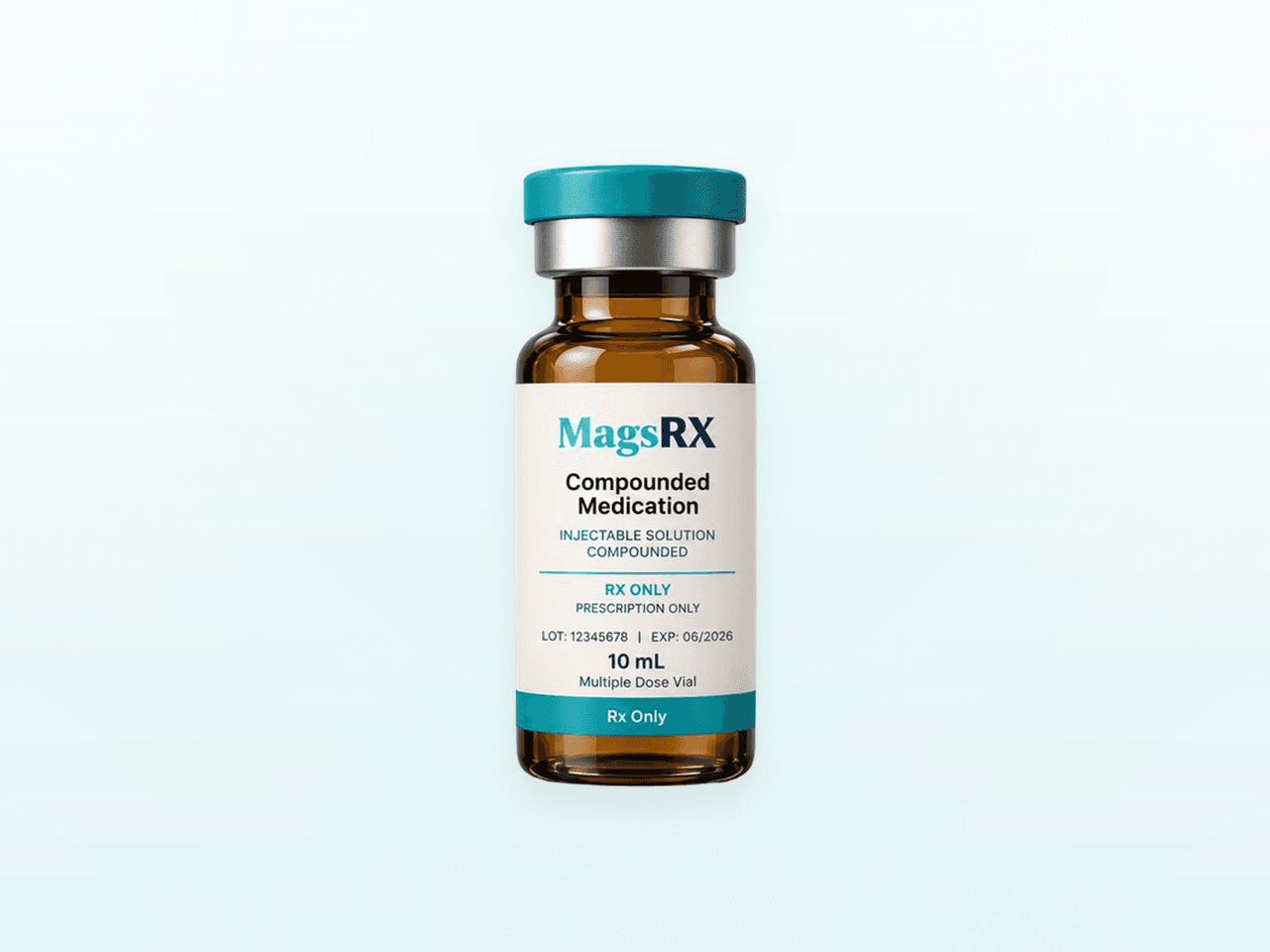
DSIP (Delta Sleep-Inducing Peptide) is a compounded nine-amino-acid peptide (a nonapeptide) first isolated in the 1970s from the cerebral blood of animals during induced deep sleep — the origin of its name. What sets it apart from the growth-hormone peptides on this menu is that it does not work by triggering a GH pulse to improve sleep as a downstream effect; the research interest is far more direct, centering on sleep architecture itself and on modulation of the HPA (hypothalamic-pituitary-adrenal) stress axis. It is a provider-prescribed therapy, dispensed only when a licensed clinician determines it is clinically appropriate for you.
DSIP is thought to act as a neuromodulator rather than a sedative or a hormone secretagogue — the reason its profile looks nothing like the GH peptides such as Sermorelin or Ipamorelin, and nothing like a conventional sleep drug. The delta-sleep and stress-axis pathways under study are what make it its own category.
Delta-sleep neuromodulation
DSIP was isolated for its association with the delta (slow-wave) phase of sleep, and research interest centers on how it may influence sleep architecture — the depth and organization of rest — rather than simply forcing sedation the way a GABAergic sleep aid does.
HPA-axis and cortisol dampening
A distinct thread of study looks at DSIP's role in modulating the hypothalamic-pituitary-adrenal stress axis and the cortisol response — a calming, anti-stress signaling interest that the sleep-through-GH peptides on this page do not share.
Central, not peripheral
Unlike BPC-157's localized tissue-repair focus or Tesamorelin's visceral-fat and metabolic work, DSIP's studied activity is centrally acting — a small peptide that appears to cross into the brain and interact with the neural systems governing rest and stress regulation.
Candidacy
A considered fit, not a funnel.
DSIP tends to draw adults whose primary frustration is sleep itself — trouble reaching deep rest, or a rhythm thrown off by stress, travel, or shift work — rather than someone pursuing lean mass, fat loss, or GH-peptide recovery. It is explored as support for the body's own sleep and stress regulation, not as a replacement for evaluation of a sleep disorder such as apnea. A provider reviews your history and current sleep picture to decide whether it fits.
- Adults whose main goal is deeper, more restorative sleep rather than body composition
- People whose rest is disrupted by a high-stress or over-driven cortisol pattern
- Those wanting a non-hormonal, centrally-acting approach to sleep support
- Anyone with untreated or suspected sleep apnea or another undiagnosed sleep disorder
- People who are pregnant, breastfeeding, or planning pregnancy
- Anyone with a known hypersensitivity to the peptide or its diluent
Expected Timeline
What to expect
DSIP is typically dosed in the evening, ahead of the sleep window it is studied to support, and run as a focused course while your provider tracks how your rest responds — not as an open-ended nightly habit.
- 01
Weeks 1-2
Initiation
After provider review of your history and sleep picture, you begin a small subcutaneous dose timed to the evening. The early aim is simply to confirm tolerability and observe how your rest begins to respond.
- 02
Weeks 3-6
Active course
Evening dosing continues at a steady cadence set by your provider. Sleep depth, ease of falling asleep, and how rested you feel on waking are the qualities to watch as the rhythm settles.
- 03
Weeks 6+
Reassess or cycle
Rather than continuing indefinitely, DSIP is commonly reassessed and often cycled. Your provider decides whether to continue, pause, or adjust based on how your sleep and stress picture have shifted.
Response varies from person to person, and DSIP is a compounded, provider-directed therapy. Your dose, timing, and duration are set and adjusted by your prescriber — the cadence above is illustrative, not a promise of any particular result.
The Science
Why clinicians reach for it.
The evidence base for DSIP is early and largely preclinical, and its very mechanism remains an area of active study. We describe the direction of research honestly — no invented trials, no promised outcomes.
Named for a phenomenon, not a proven drug
DSIP takes its name from its original isolation alongside delta-wave sleep. That naming reflects where research attention began, not an established, FDA-cleared sleep effect — the peptide's precise role is still being characterized.
A stress-axis angle
Beyond sleep, a meaningful share of the scientific curiosity around DSIP concerns cortisol and HPA-axis regulation — an anti-stress framing that distinguishes it from sedative sleep aids and from every GH-releasing peptide we offer.
Not FDA-approved
DSIP is not an FDA-approved drug and is available only through compounding when a licensed provider deems it appropriate. It should be viewed as an emerging, supportive peptide under study — not an established treatment for insomnia or any condition.
Our Standard of Care
Real transformation, with a friendly team that stands by you every step.
- 01.Provider-Supervised
- Licensed providers review your health profile and guide every treatment decision. You only move forward when a plan is right for you.
- 02.Personalized Plans
- GLP-1 and peptide protocols are titrated to your biology and your goals. No one-size-fits-all, no guesswork.
- 03.We Stand By You
- From eligibility review to ongoing check-ins, our care team supports you throughout your transformation — discreet shipping and secure messaging included.
Clinical Safety
No therapy is right for everyone.
What to know
Reported effects are generally mild and may include injection-site irritation or redness, headache, or transient grogginess or dizziness. Because human safety data is limited, any new or persistent symptom — especially daytime sedation that affects driving or work — should be reported to your provider promptly.
Contraindications
Not appropriate during pregnancy or breastfeeding, or for anyone with a known hypersensitivity to the peptide or its diluent. It is not a substitute for evaluating an underlying sleep disorder such as apnea, and should be used cautiously alongside other sedating medications. Share your full medical history and current medications so your provider can assess suitability.
MagsRX protocols are prepared by partner compounding pharmacies in the United States. Compounding pharmacies are regulated by both state boards and the FDA and have been part of American medicine since long before mass-manufactured drugs existed. The active ingredient is prepared per your protocol — supervised by your provider — and delivered direct to your door.
Frequently Asked
Questions worth asking before you begin.
Those peptides can improve sleep as a downstream effect of prompting a nighttime growth-hormone pulse. DSIP does not touch the GH axis at all — its studied action is direct neuromodulation of slow-wave sleep architecture and the HPA stress axis. If your goal is deeper rest specifically, rather than GH-driven recovery or body composition, DSIP is the more targeted option.
No. It is not a GABAergic hypnotic like a prescription sleep drug. The research interest is in modulating the body's own slow-wave sleep and stress signaling rather than sedating you into unconsciousness, which is part of why it remains a compounded, provider-gated peptide rather than an approved sleep medication.
We can't promise that, and it isn't an approved treatment for insomnia. DSIP is studied for supporting sleep quality, and it is not a substitute for evaluating causes like sleep apnea, thyroid issues, or an anxiety disorder. Your provider will look at the whole picture before deciding whether it's a reasonable fit.
Explore More
Other therapies to consider.
 Tissue Repair
BPC-157
A body-protection pentadecapeptide studied for how it may support the slow-healing places — a strained tendon, an irritable gut lining, a joint that lingers.
Learn more →- GH Support
Sermorelin
A GHRH analog that asks your own pituitary to release growth hormone on its natural nightly schedule — rather than replacing the hormone from outside.
Learn more → - GH Secretagogue Stack
Ipamorelin + CJC-1295
Two peptides, two doorways into your own growth hormone — a steady GHRH signal from CJC-1295 paired with Ipamorelin's clean release trigger, tuned to work with your nightly rhythm rather than override it.
Learn more →
Begin
DSIP begins with a short assessment.
A licensed provider reviews every order and prescribes only if it is clinically appropriate for you. Your therapy is prepared by a partner compounding pharmacy and delivered discreetly to your door.