Peptide · Metabolic
MOTS-C
A peptide written into your mitochondrial DNA itself — MOTS-C is studied as a metabolic signal from the cell's power plants that engages AMPK, the energy-sensing switch.
Available by consultation
What it is
Mitochondrial Metabolism
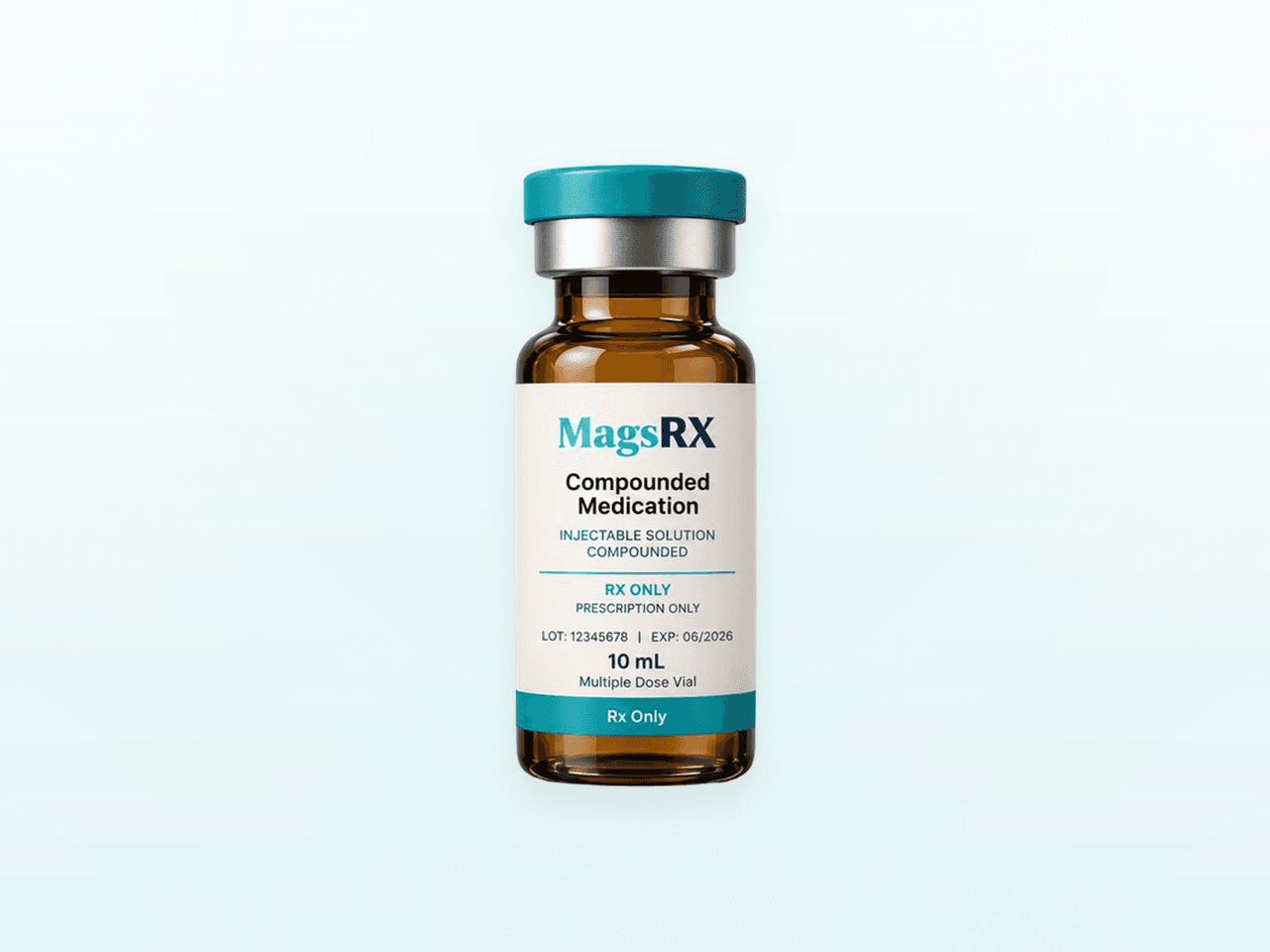
MOTS-C is a mitochondrial-derived peptide: a short 16-amino-acid sequence encoded not in your nuclear genome but within the mitochondrial DNA — specifically the 12S rRNA region — making it one of the few therapies on this menu that originates from the cell's own power plants. It is best understood as a metabolic signaling molecule that helps coordinate how cells sense and use energy, with research interest in insulin sensitivity, glucose handling, and physical capacity. This sets it apart from the GHRH analogs here, from repair peptides like BPC-157, and even from NAD+: where NAD+ is a coenzyme fuel the mitochondria burn, MOTS-C is a signal the mitochondria send. It is a compounded therapy, prescribed only when a licensed provider determines it is clinically appropriate for you.
MOTS-C is unusual before it does anything at all: it is transcribed from mitochondrial DNA, then acts as a messenger from the mitochondria to the wider cell. What it engages is metabolic regulation, not a hormone axis.
Born inside the mitochondria
MOTS-C is encoded within the mitochondrial 12S rRNA gene — a striking origin that separates it from every nuclear-encoded peptide on this menu. It belongs to the mitochondrial-derived peptide family, molecules studied as the mitochondria's own way of signaling metabolic state to the rest of the cell.
Engages the AMPK energy switch
Research centers on MOTS-C activating AMP-activated protein kinase (AMPK) — the cellular fuel gauge that tips metabolism toward using glucose and fatty acids for energy. This is a metabolic-regulation pathway, entirely separate from the GHRH-receptor signaling behind Sermorelin or Tesamorelin.
Moves to the nucleus under stress
Under metabolic stress, MOTS-C is studied for translocating to the cell nucleus and influencing genes tied to antioxidant defense and metabolic balance — a retrograde 'mitochondria-to-nucleus' signal that is the mechanistic heart of the interest around it, and something no GH-axis or tissue-repair peptide here does.
Candidacy
A considered fit, not a funnel.
MOTS-C tends to draw adults focused on metabolic resilience and energy at the cellular level — insulin sensitivity, glucose handling, and physical capacity — rather than the visceral-fat target of Tesamorelin or the tissue-repair goals of BPC-157. It differs from NAD+ too: NAD+ replenishes a depleted fuel, while MOTS-C is a mitochondrial signaling peptide studied for engaging the AMPK pathway. It is a metabolic tool, not a substitute for the fundamentals of diet, movement, and sleep, and it is prescribed only when a licensed provider judges it clinically appropriate for you.
- Adults focused on metabolic health, insulin sensitivity, and glucose regulation
- Those interested in cellular energy and exercise capacity rather than tissue repair or GH support
- People who prefer a non-hormonal, mitochondrial signaling approach over GH-axis peptides
- Anyone who is pregnant, breastfeeding, or trying to conceive
- People with a known hypersensitivity to the peptide or diluent
- Those seeking a growth-hormone, sexual-health, or tissue-repair therapy — MOTS-C is none of these
Expected Timeline
What to expect
MOTS-C is typically run as a subcutaneous course, often cycled rather than taken open-endedly. Your provider sets the dose, cadence, and cycle length and adjusts to how you respond.
- 01
Weeks 1-2
Onboarding
After provider review and any baseline metabolic labs, you begin a subcutaneous protocol at the dose and frequency your prescriber sets. Early on the focus is establishing routine and confirming tolerability.
- 02
Weeks 3-6
Metabolic settling
Dosing continues on the cadence your provider chooses, sometimes in an on/off cycling pattern. Metabolic and energy-related effects tend to build gradually over weeks rather than appearing immediately.
- 03
Weeks 6-12+
Reassess & cycle
Rather than continuing indefinitely, protocols are commonly reviewed and cycled. Your provider revisits how you feel and, where relevant, your metabolic markers to decide whether to continue, adjust, or pause.
Response varies considerably between individuals, and MOTS-C is a compounded, provider-directed therapy. Your dose, route, and cycle are set and adjusted by your prescriber — the cadence above is illustrative, not a promise of any particular result.
The Science
Why clinicians reach for it.
The evidence base for MOTS-C is emerging and largely preclinical. We describe the direction of research honestly — no invented trials, no promised outcomes.
A mitochondrial-derived peptide
MOTS-C is one of a small, relatively new class of peptides encoded within mitochondrial DNA. That origin is why much of the research frames it as a genuine signal from the mitochondria about the cell's metabolic state, rather than a molecule engineered to hit a single receptor.
AMPK and metabolic regulation
The most-studied thread is its relationship to AMPK signaling and downstream effects on glucose and lipid metabolism and insulin sensitivity — work carried out largely in animal and cell models, which is part of why it remains a compounded, provider-gated option.
Not FDA-approved
MOTS-C is not an FDA-approved drug and is available only through compounding when a licensed provider deems it appropriate. It should be viewed as an emerging, supportive metabolic therapy — not an established treatment for diabetes, obesity, or any condition.
Our Standard of Care
Real transformation, with a friendly team that stands by you every step.
- 01.Provider-Supervised
- Licensed providers review your health profile and guide every treatment decision. You only move forward when a plan is right for you.
- 02.Personalized Plans
- GLP-1 and peptide protocols are titrated to your biology and your goals. No one-size-fits-all, no guesswork.
- 03.We Stand By You
- From eligibility review to ongoing check-ins, our care team supports you throughout your transformation — discreet shipping and secure messaging included.
Clinical Safety
No therapy is right for everyone.
What to know
Human safety data for MOTS-C is limited. Reported effects are generally mild and may include irritation, redness, or discomfort at the injection site, and occasional lightheadedness, fatigue, or headache. Because it may influence glucose metabolism, anyone monitoring blood sugar should watch for changes and report them. Any new or persistent symptom should be raised with your provider promptly.
Contraindications
MOTS-C is not appropriate during pregnancy or breastfeeding, or for anyone with a known hypersensitivity to the peptide or diluent. Use caution and close provider oversight if you have diabetes or take glucose-lowering medication, since metabolic effects could compound. Share your full medical history and medication list so your provider can assess suitability; it is prescribed only when clinically appropriate.
MagsRX protocols are prepared by partner compounding pharmacies in the United States. Compounding pharmacies are regulated by both state boards and the FDA and have been part of American medicine since long before mass-manufactured drugs existed. The active ingredient is prepared per your protocol — supervised by your provider — and delivered direct to your door.
Frequently Asked
Questions worth asking before you begin.
They sit on opposite sides of the same system. NAD+ is a coenzyme — a consumable fuel the mitochondria burn to produce energy. MOTS-C is a signaling peptide encoded in mitochondrial DNA that is studied for engaging the AMPK pathway and influencing how cells regulate metabolism. One replenishes the fuel; the other is a message about how to use it.
No. Tesamorelin is a GHRH analog studied specifically in relation to deep visceral fat through the growth-hormone axis. MOTS-C does not touch the GH axis at all — its research centers on AMPK, insulin sensitivity, and glucose metabolism as a mitochondrial signaling peptide, which is a different mechanism and a different goal.
Yes. MOTS-C is a compounded medication dispensed only after a licensed provider reviews your intake and determines it is clinically appropriate for you. It is not FDA-approved and is never sold over the counter here.
Explore More
Other therapies to consider.
 Visceral Fat
Tesamorelin
The stabilized GHRH analog studied specifically for the deep abdominal fat that resists diet and training.
Learn more →- Tissue Repair
BPC-157
A body-protection pentadecapeptide studied for how it may support the slow-healing places — a strained tendon, an irritable gut lining, a joint that lingers.
Learn more → - GH Support
Sermorelin
A GHRH analog that asks your own pituitary to release growth hormone on its natural nightly schedule — rather than replacing the hormone from outside.
Learn more →
Begin
MOTS-C begins with a short assessment.
A licensed provider reviews every order and prescribes only if it is clinically appropriate for you. Your therapy is prepared by a partner compounding pharmacy and delivered discreetly to your door.